


Before there was a race, there was a question.
In 1982, a British RAF officer named John Foden wanted to know whether the journey of Pheidippides was historically plausible. Pheidippides was the Athenian courier who, in 490 BC, ran from Athens to Sparta to ask for Spartan reinforcements ahead of the Battle of Marathon. The distance is roughly 246 kilometers. Most historians had treated the account as legend. Foden decided to test it on foot.
He was 56 years old. He made the journey alongside four fellow RAF officers. Three of them finished, including Foden who completed it in 37 hours and 37 minutes. The route was real. The time was human. The following year, the first official Spartathlon was held.
The finishers
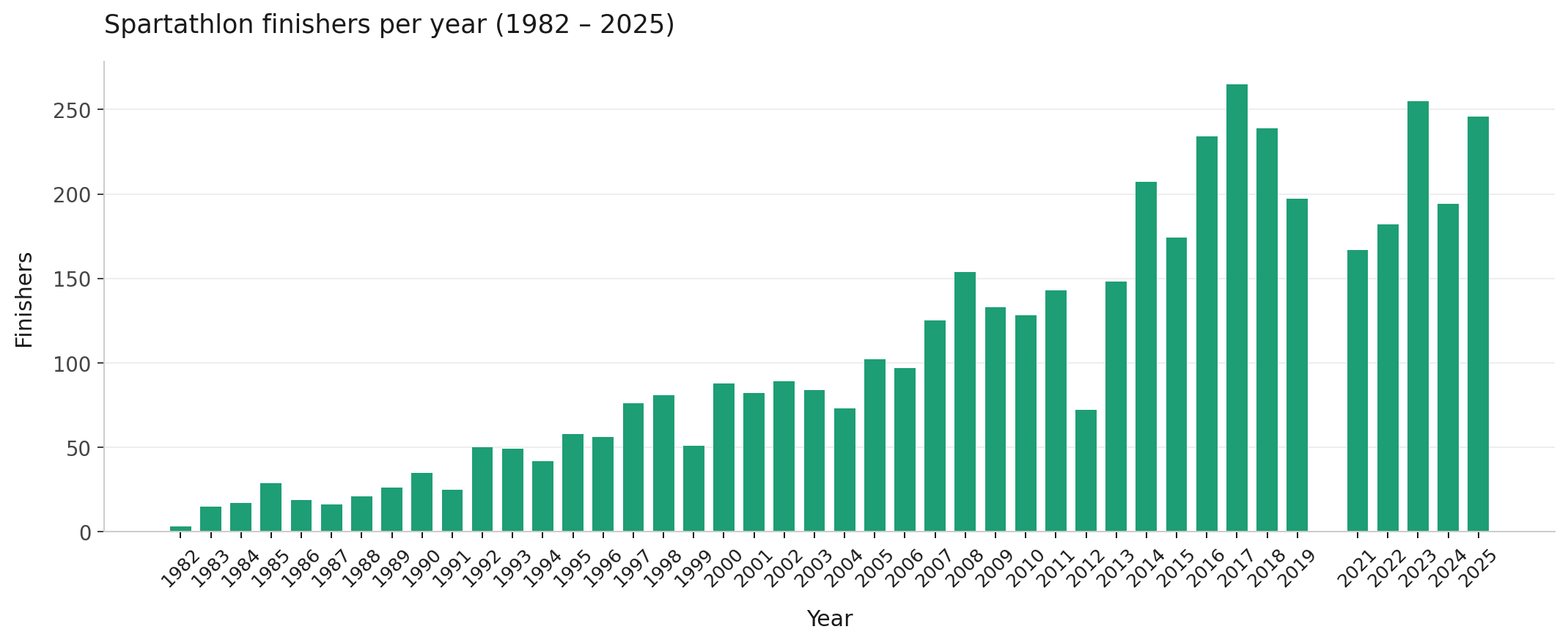
Over forty years, 4,547 finishes have been recorded across 2,506 unique athletes from 72 countries. The numbers have grown steadily. The early editions in the 1980s drew a few dozens to the race. By the 2010s, the annual finisher count was regularly above 200. The race grew not because it got easier, but because the culture of ultrarunning grew around it, and Spartathlon remained one of the benchmarks people aimed for.
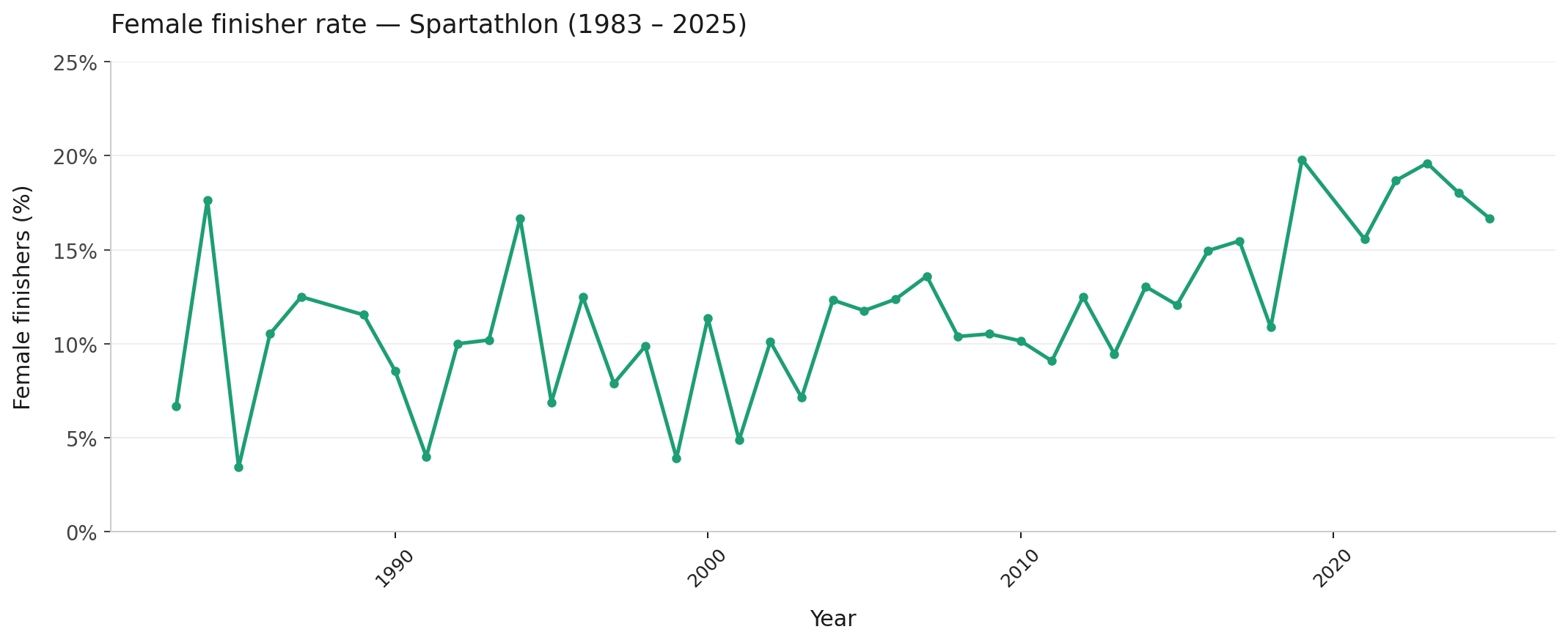
Although modest, the number of female finishers keeps increasing steadily with time. In the first official edition of spartathlon there was only one woman. In recent years, women account consistently for above 15% of finishers.
The names
In Sparta, there is a monument with the names of Spartathlon winners. It reads like a short history of ultrarunning.
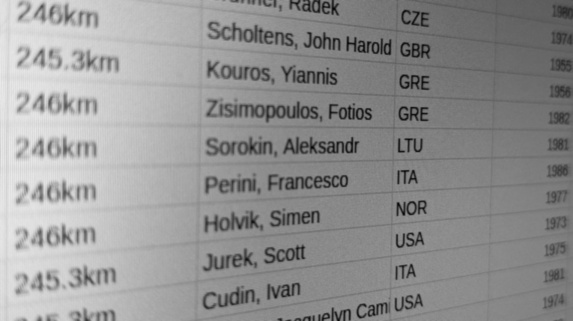
Yiannis Kouros won the first official Spartathlon in 1983 and went on to win four times in total. Kouros is one of the defining figures in the history of the sport, a Greek runner who spent much of his career setting records that seemed untouchable for decades. His 24-hour run record of 303.506 km, set in 1997, stood for many years.
Scott Jurek, whose name appeared in the Economist article that first introduced me to this world over a decade ago, won Spartathlon three consecutive times between 2006 and 2008. His wins came during a period when he was arguably the best ultrarunner in the world.
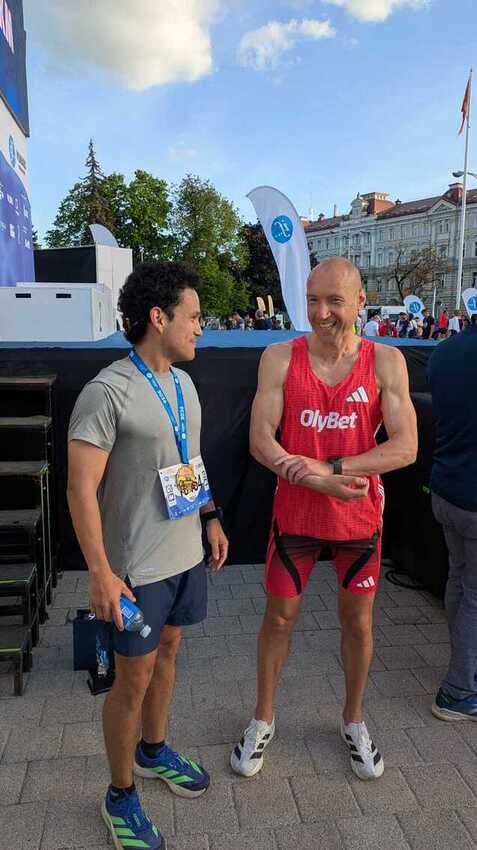
Aleksandr Sorokin won in 2017 and currently holds the 24-hour world record of 319.6 km, set in Verona in 2022. A couple of weekends ago, I found myself briefly in the same space as Sorokin in Vilnius, where he came second at the half marathon. We spoke briefly. We talked about plans for the year. He told me about Comrades in July. I told him about Spartathlon in September. He smiled. He reminded me he already won that one.
The outright course record belongs to Fotios Zisimopoulos of Greece, who in 2023 became the only person to finish under 20 hours, crossing in 19:55:09. He has also won in 2021, 2022, and 2024, making him the defining figure of the current era of the race.
Greece leads the all-time winners table with 10 victories. Germany and Great Britain follow with 5 each, Japan with 4, and the United States and Italy with 3 apiece.
The Japanese
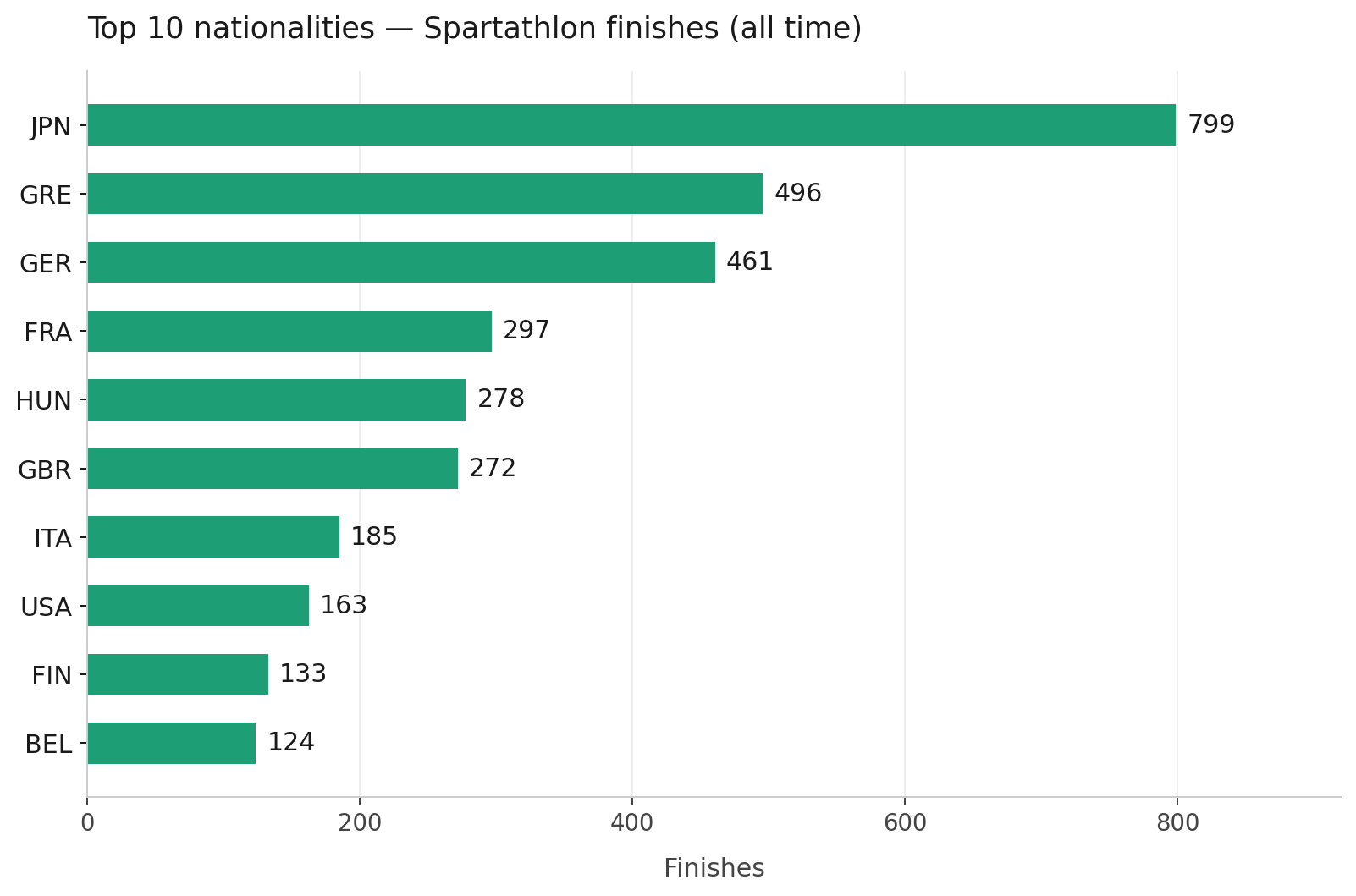
The country that dominates the finishers table overall, however, is Japan. Not Greece, not Germany. Japan, which sits roughly 9,400 kilometers from Athens. Japanese runners account for 799 finishes in the all-time database, nearly double the Greek total of 496 and well ahead of Germany’s 461. France, Hungary, and Great Britain follow.
This is not an accident. It reflects something about Japanese running culture that shows up consistently across the sport: a commitment to long-distance running that goes beyond recreational participation. I was first-hand witness of this when running Mt. Fuji 100 in 2025. It shows up at Spartathlon as it shows up at 100-mile races, at multi-day events, and in the depth of amateur marathon fields across Japan. The dedication required to travel from Japan to Greece to attempt a race with such finishing rate, and to do so in numbers that dwarf almost every other nation, says something that is hard to quantify.
The experienced
One of the things that stands out when you look at the age data is how old the finisher pool is.
The youngest finisher in the all-time database was 18. The oldest was 75. The median age is 45. These are not people in the early years of their running careers. They are people who have spent years, sometimes decades, building the base and the experience that a race like this requires. You do not arrive at Spartathlon by accident.
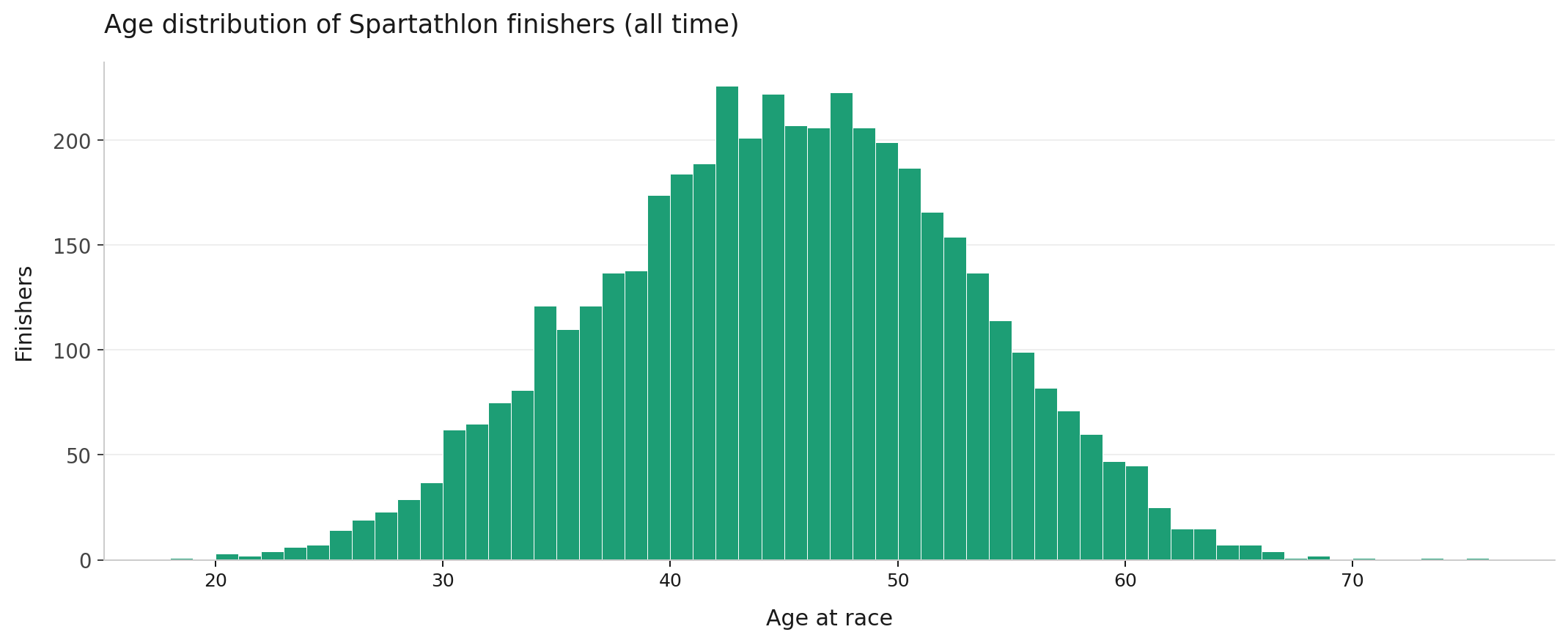
What the data does suggest, consistently, is that finishing Spartathlon is not primarily a young person’s achievement. It takes years to build what the race asks for.
The Colombian
There is one more data point worth mentioning, and it is a personal one.
There has been exactly one Colombian in the history of Spartathlon. Camilo Martinez started the race three times, in 2022, 2023, and 2024. He finished two of those. His best time is 34:08:30.
The 36-hour cutoff is the wall everyone is racing against. The median finisher crosses in 33:58. Camilo’s best puts him comfortably inside that, with less than two hours to spare.
I have been registered for Spartathlon 2026 since February, placed on the autoqualified list as the only Colombian entry. In September, I will be the second Colombian to stand at the start line in Athens.
34:08:30 seems like a reasonable thing to aim for.