I went into Queyras knowing it would be a controlled effort: no acclimatization, a route above 3000 meters, exposure. What I did not expect was that it would turn into the hardest trail race I have run to date. Not the longest, not the steepest on paper, but the one that came closest to breaking me.
Here is how it went.
A start with the left foot
I arrived at my accommodation in Guillestre with about thirty minutes to prepare for the race. Logistical mistakes on my part. Thankfully most of my gear had been packed since before the flight into France, so dressing was quick. The problem was food. I started cooking the aguapanela I wanted to test in action, the same lukewarm sugar-cane drink that served me well at the Everesting night in Grunewald. Then I started on the rice balls, soy and honey, and ran out of time. I abandoned them half cooked on the counter and rushed out to collect my bib before the deadline.
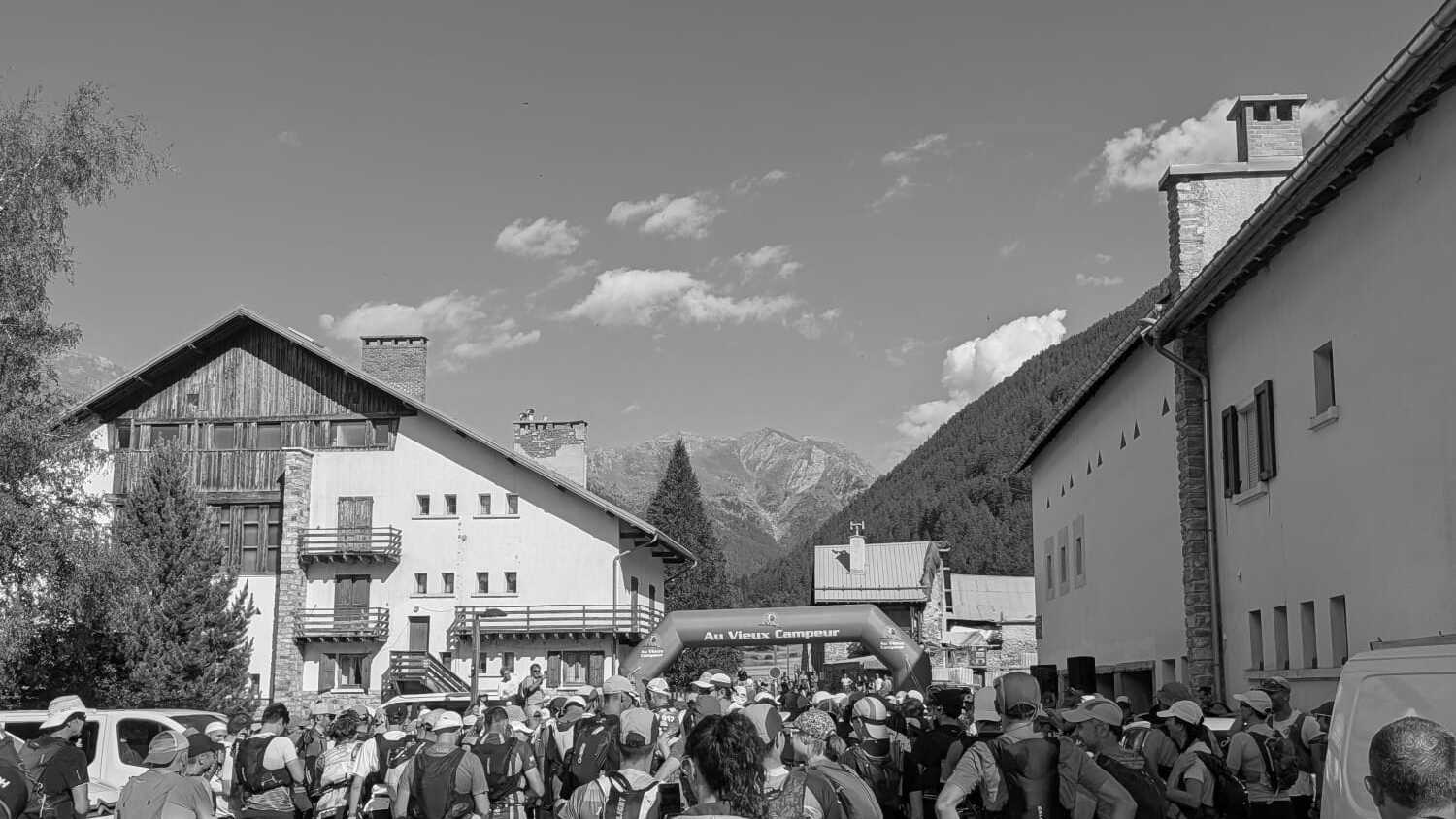
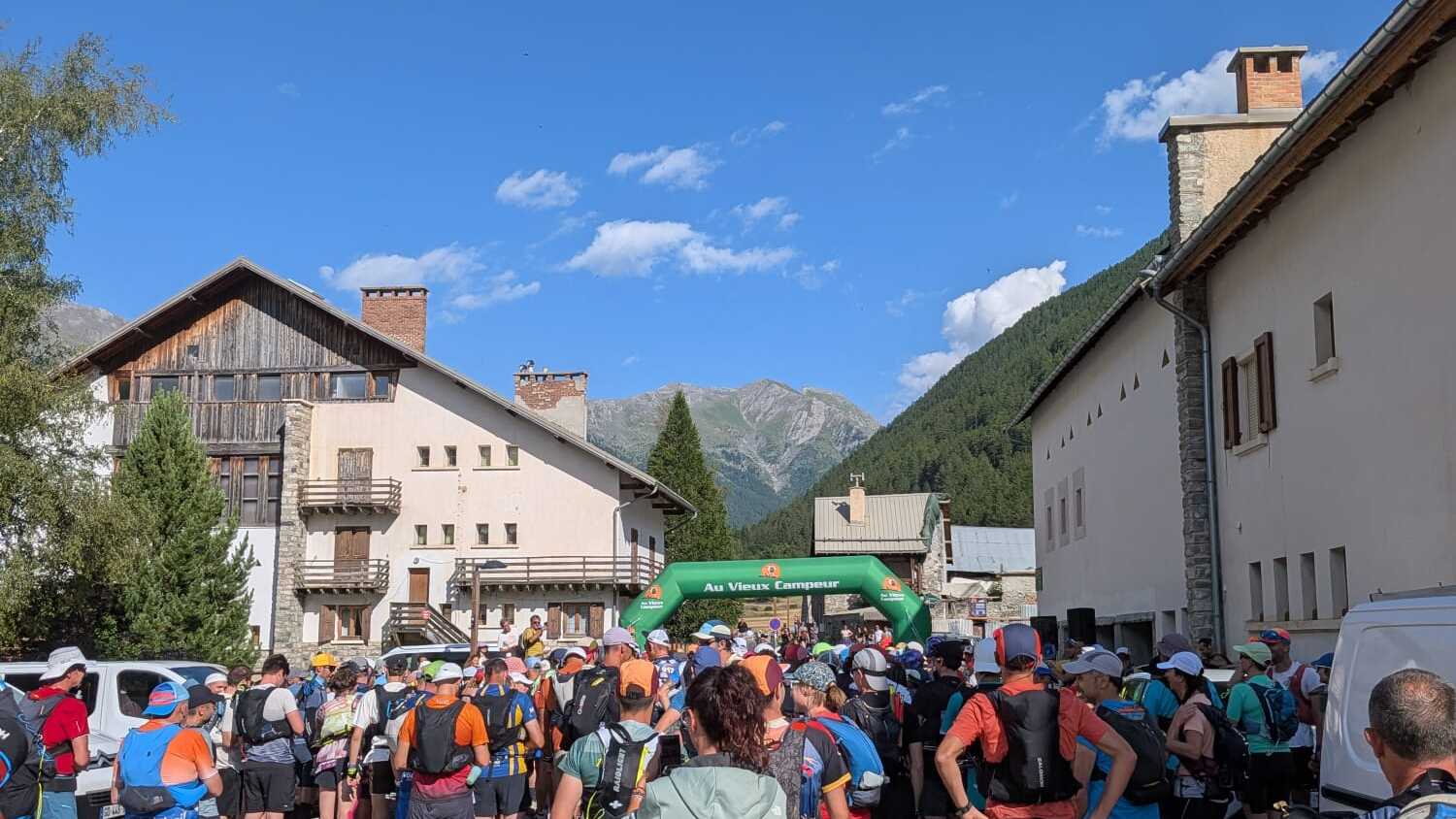
I jumped on the bus that carries the runners from the event’s messe to Ristolas, the start of Le 6 Cols, the 90 km race of the Grand Raid du Guillestrois - Queyras. It was 16:45, I had not eaten in hours, and I was heading into a very hard effort hungry, with no drop bag and nothing staged along the course. I was frustrated.
We arrived at a small paradise of a village hidden in the Queyras mountains. As we lined up, one of the runners from the 170-kilometer race jogged through, struggling to keep moving while the rest of us clapped in admiration. What had this man already seen out there, I wondered.
I was about to find out.
To a slow start
The race set off and we held together as a group for a long stretch. It was, without exaggeration, the slowest start I have ever been part of. Nobody was in a hurry. Everybody understood what was coming.
About three kilometers in, poles came out all at once. The climbing had begun. I had full awareness: my pace, my footing on the rocks, the rhythm of my poles hitting the ground in time with my stride. I sipped the aguapanela I had managed to cook before leaving.
We cleared the first col, Col Vieux, at 2806 meters. Roughly twenty-four hours earlier I had been close to sea level. The slight headache I had been carrying since arriving in Guillestre was still there. I took off my cap to adjust it and let the small pulse in my temples pass unnoticed. One done, five to go.
At the first aid station, a refuge in the mountains, I tried to make up for the empty stomach without overdoing it: oranges, bananas, chocolate. I took one of the ginger salt pills I discovered at Everesting, hoping to get ahead of any GI trouble from the improvised nutrition. Then off, slowly, toward Pic de Caramantran at 3020 meters.
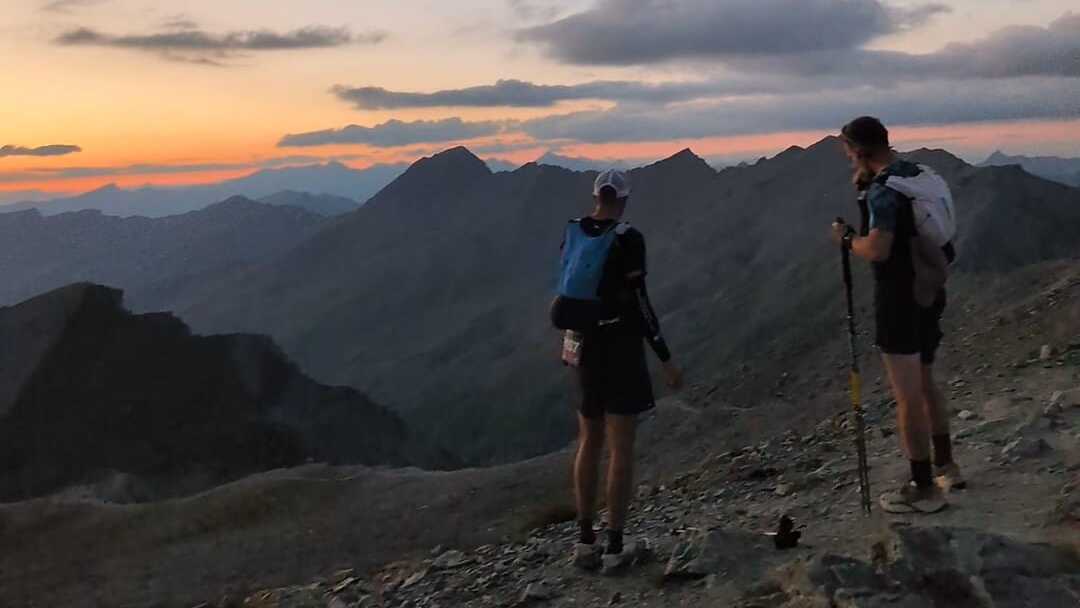
I reached it in time to watch the sun set over the Queyras. One of the most beautiful sights I have ever seen, and one of many the race would hand me. I used the moment to pull out my headlamp and get ready for the night. I wrapped my buff around my head under the cap to soften the grip of the lamp. I did not want to give the headache any more reasons to grow.
Into the dark
A long, gentle descent followed, the flattest terrain we would see all race. Darkness settled and soon there was nothing but the trail in front of me. On the way down I could see, far off in the black, a thread of lights hanging at high altitude. I could read the steepness just from the angle of the runners ahead.
I reached the second aid station before midnight, at kilometer 29, in good spirits and with strong legs. So far I was on track for the twelve-minutes-per-kilometer plan, the one I had already admitted was optimistic. Fruit, chocolate, another ginger salt pill, water with carb mix, and out. I pulled my jacket on. The long sleeve was no longer enough against the cold mountain wind.
I started the next climb with high hopes. Clear this one and I would reach a larger aid station where I could actually nap. I was alone for a long time. The vegetation kept changing and the grade stayed relentlessly steep, not a flat meter anywhere. Looking up, the headlamps ahead were so high they could have passed for stars.
Then my breathing began to shorten.
Not the pain cave
Groups of runners caught up and I waved them past. My stride came down to maybe ten centimeters. My heels stopped touching the ground and I leaned hard on my poles just to stay upright. The headache sharpened. My breath went heavy. I needed to stop. More runners passed. I started again and a deep sleepiness came over me, my body wobbling with every step. The yawning turned into sudden gagging. I vomited a little and spat. My stomach began to hurt out of nowhere. It felt like every system was shutting down at once.
The strange part was that this was not the pain cave. I have been in the pain cave many times and I know what it feels like. The body is exhausted and the mind talks it through, hang on until the next flowing section, wait for energy to come back. This was different. My legs were not tired. My mind was not tired. It was as if gravity had simply tripled and my body could no longer function under it. Muscles present, willing, and useless.
I stepped off the trail for a toilet stop that gave me no warning at all. It did not help. I only grew more dehydrated, sipping constantly, stopping more often. Runners kept flowing past. “Ça va? Allez allez, courage.”
Climbing the third col, Col des Estronques at 2654 meters, took an eternity. Somewhere in there I finally named it: altitude sickness, arriving on schedule as the route pushed back toward 2700 meters. The exposed face of the mountain turned bitterly cold. And a new thought arrived with the wind. My first DNF? Right before Spartathlon? What would that do to my confidence heading into the hardest training block for the hardest race of my life? At the top the wind picked up.
Then, going down, something shifted. Every downhill step made me better. I held a decent pace for seven kilometers and rolled into the third aid station at kilometer 42, somewhere around 3am.
By the piano
I refilled and sat down. How was I going to do three more climbs of that grade and altitude when the last one had nearly ended me? My legs were fine. Feet fine. Knees fine. No blisters. Everything below the waist was in working order. What horrified me was how completely incapable I had been up there. I sipped some coffee and thought about it.
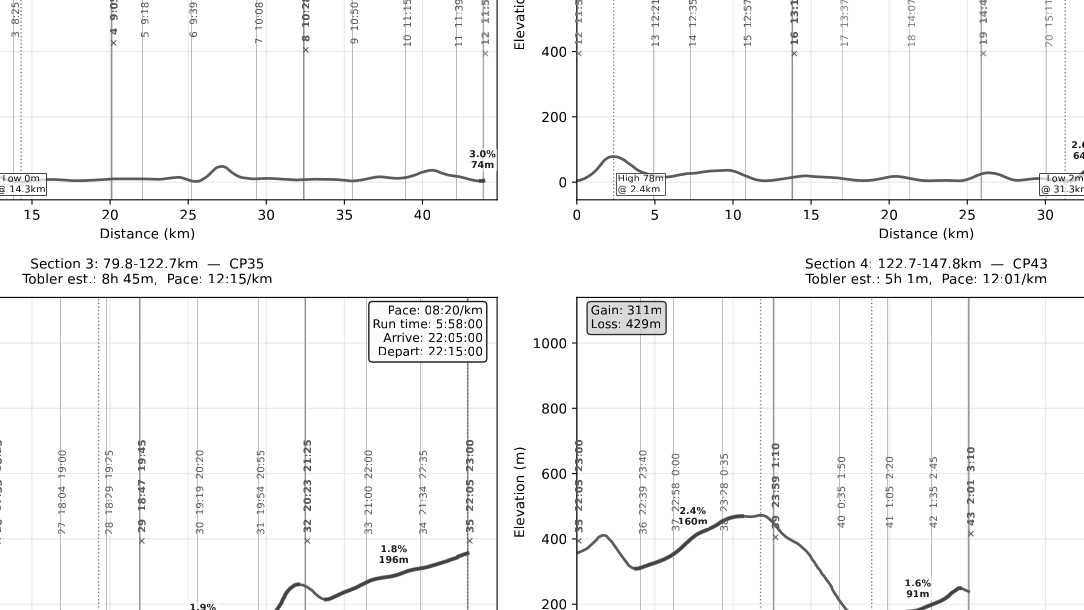
Then I laid my jacket on the floor and stretched out under some chairs by a piano that happened to be sitting in the aid station. Twenty minutes later I stood up, a little clearer. I kept staring at the elevation profile ahead, studying it the way I had studied it a dozen times already, as if this reading might finally reveal some hidden detail that let me exhale and say, ah, it is not so bad.
It did not. So I fell back on trail-race logic. If I quit here, the bus would collect us at closing time, about two hours out. What was I going to do until then? Continuing sounded better than sitting. This is the quiet advantage of trail races over road ones: abandoning usually means a long wait in a remote place before anyone can move you, so walking forward stays the more appealing option for a long time. My legs were strong. The night would end soon, and warmer weather would then be on my side. I brushed my teeth and went back out.
The moon, and the adjustment
I started jogging at a steady pace, still not believing what had happened up there. How could I be the same person on that climb and running easily on this flat? Soon the climbing resumed, poles out, into the dark. I remember the sound of rivers and waterfalls I could hear but not see, and thinking how good it would have been to witness them in daylight.
We reached a plateau, the first of several before the fourth col, Col Girardin at 2699 meters. I stopped to photograph the moon as the first light came up behind it. That single sight made the decision to continue worth it. We crossed three or four more plateaus before the col, and this time the climb, though slow, went far better than the disaster before.
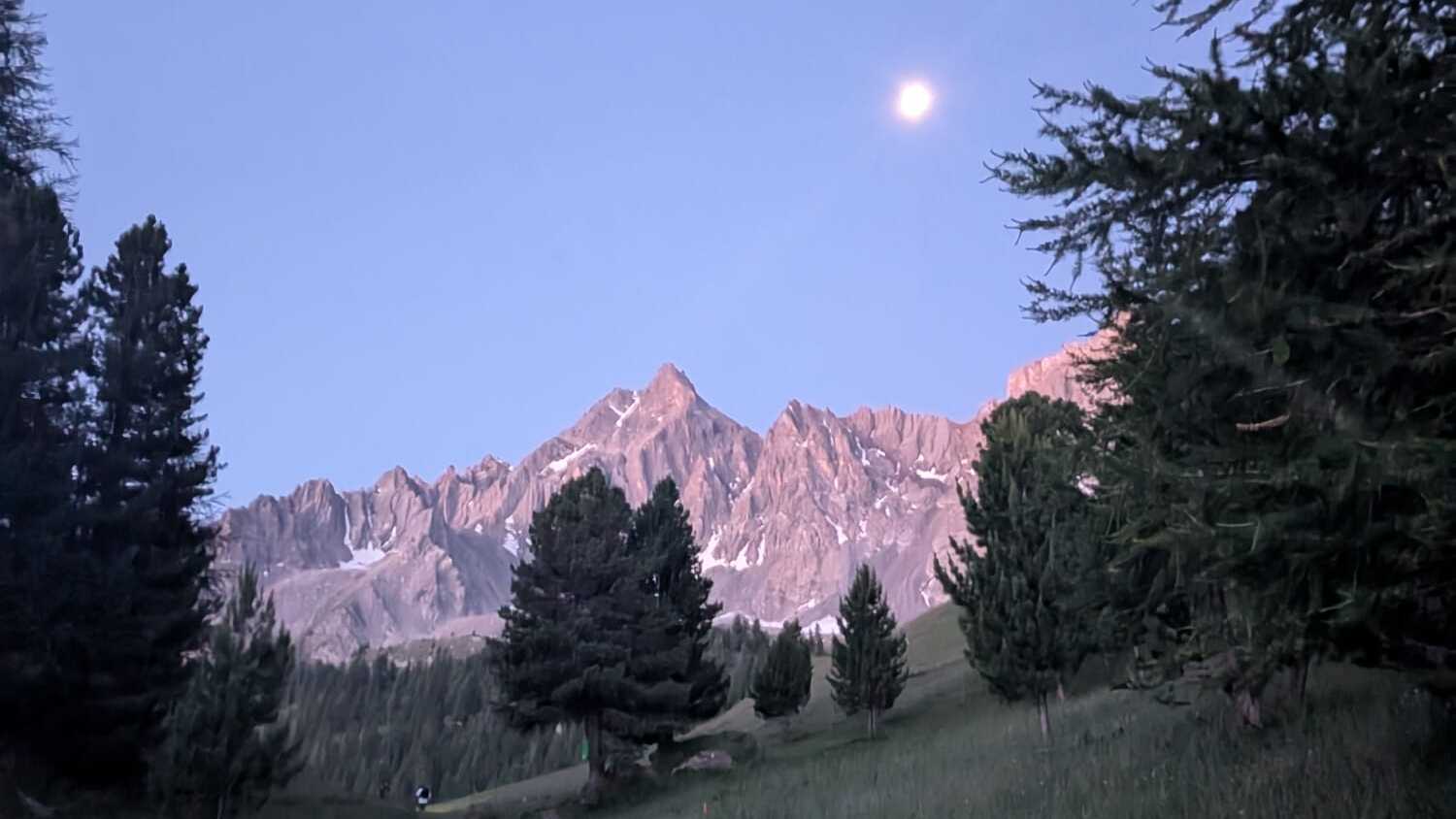
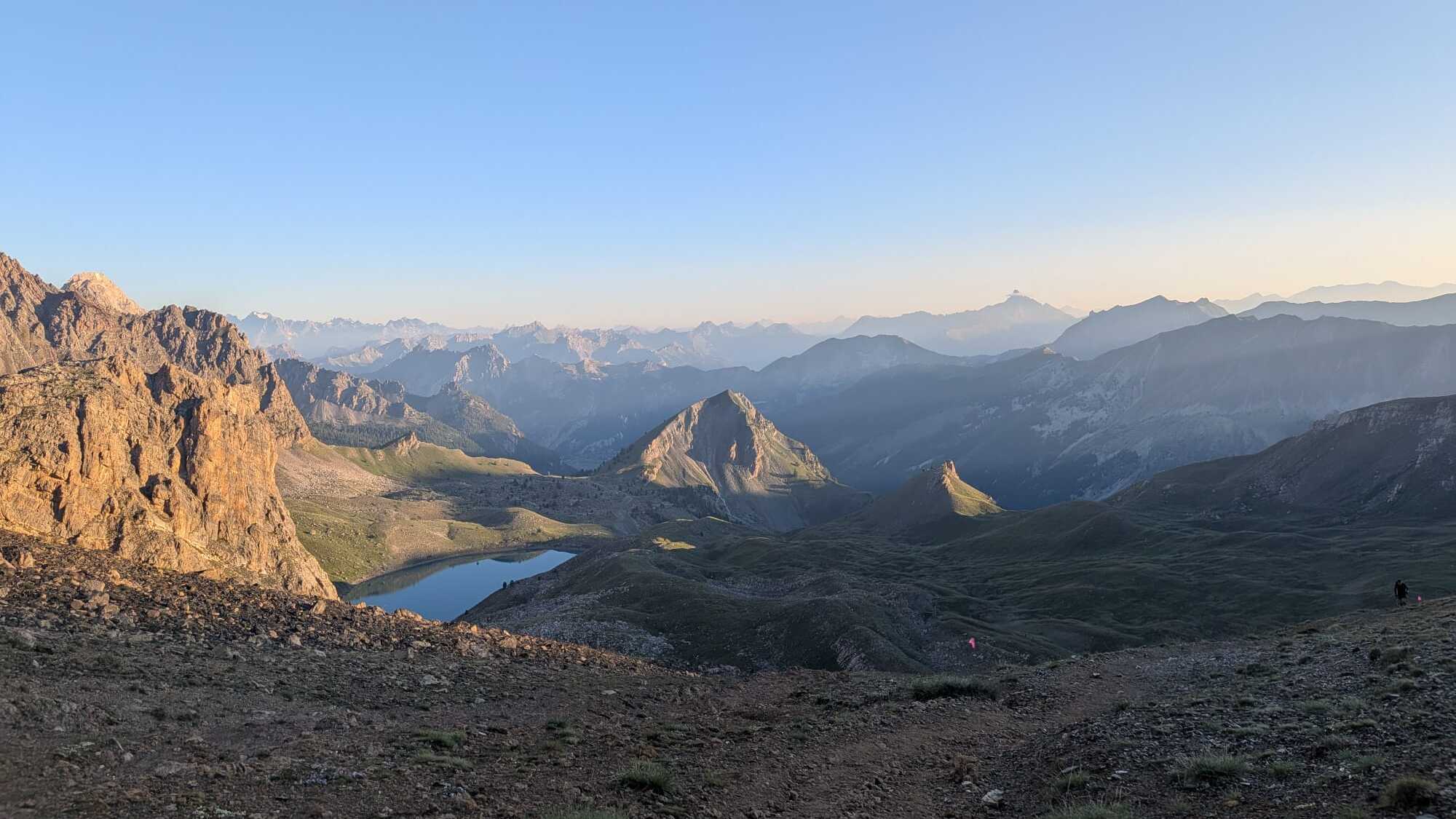
I think the plateaus were the reason. Each brief flat let my body catch up to the altitude, even for a moment. Down the other side we went, steeper than the last descent, the sun rising until I finally shed a layer at the fourth aid station.
The summit that lied
It was now 7:00. The night was officially over, and so came the hardest climb of the day, the fifth, Col des Houerts at 2871 meters, with sustained gradients well above 25 percent. I read my notes again, still hunting for the error in the GPX that would make it kinder than it looked. I told myself I run well in heat, so at least I had that.
I left the aid station clinging to that hope. I started climbing with other back-of-the-pack runners, and the shared slow rhythm was its own small motivation. After a good hour we came out of the woods. Queyras has a consistent structure to it: forest until around 2000 meters, then grassy meadows, then bare stone toward 2500 and above. At a brief plateau near 2200 meters we crossed a river and I dunked my shirt, buying a few seconds of glacier-cold relief before the heat took over again. There was no shade left. We had left the trees behind.
My strategy shrank to a game. Look ahead, spot a runner, make a visual marker. That’s my next goal. Then make it to the goal, and turn around to see what I had climbed and count it as a win. Runners from all the races merged here. Strong-looking people would pass me and I would find them minutes later sitting on a rock or asleep in whatever shade they could find.
In this goal-setting game I fixed my eyes on what looked like the peak, marked by one of those yellow trail signs that point hikers back down to the valleys. I gathered everything I had and aimed for it. A runner rushed past me for a strong finish and shouted as he arrived at the summit. I started celebrating, certain I was clearing the hardest climb of the race.
I got within five meters of the yellow sign and saw it was a false summit. At least 200 more meters of climbing waited above, and the path no longer even bothered to switchback. Just a cruel straight arrow up the mountain. “Is that even the summit?” I yelled. The runner from earlier, I realized, had not been celebrating at all. In French, it had been cursing. My mistake.
My soul was crushed. I found a flat rock and sat, and it was, sadly enough, the first time all race I actually enjoyed the view. It is strange how trail running keeps your eyes on the ground, coordinating the next step, granting the landscape only quick stolen glances before you push on to the next goal. This time I sat and looked for a long while. A group of mountain goats wandered past, the only animals I would see all race.
By now the sun had gone from ally to enemy. My water was low. What moved me up the last stretch was pure rage. I stood with the poles and dragged myself over the final meters, crossed a snow patch at the top, fell once, used the moment to cool my skin again, and started down.
The last col
As always, the downhill fixed me. My breath came back, my pace lifted, and I started reeling in the people who had passed me all the way up. The 48-kilometer race front-runners were now more or less at my level, so I had a small crowd cheering as I came through, briefly part of the front pack. Funny, I thought.
At the fifth and final aid station the heat was pushing into the thirties. I filled my flasks with the last of my carb mix and left with the lightest vest I would carry all race. Then the familiar sequence one more time: switchbacks through forest, grassy meadow, and finally the sixth col, Sous le Pic d’Escreins at 2660 meters. This time there was no false summit. It sat far off but I was certain of it, and it was crowded with runners from every race stopping to take in the view.
I made it to the ridge and sat on the edge. A volunteer told me to be careful, and I can only imagine what state he thought we were all in. There, I said goodbye to the race. That was it. The last of the climbing was behind me.
The camaraderie lifted on the way down, everyone visibly relieved to be done with the vertical. I ran stretches, then walked, ran again, then walked. I could have run more, but I wanted to look. I wanted to reflect on the past twenty-three hours, because they had cost me a great deal, more mentally than physically.
What I take to Greece
I finished in 22:58:34, 110th overall and 97th of the men. Well over the 17-hour plan I had sketched, but a finish. And the field tells the rest of the story: of 212 starters, only 146 of us reached the line. Sixty-seven abandoned. Nearly a third of the people who set off in Ristolas did not make it back, which is the clearest number I can give for how the day actually went.
The legs, the feet, the fueling that I improvised from aid-station fruit and chocolate, all of it held. What did not hold was the one variable I had flagged as the great unknown before the start: altitude. This race demands adaptation for someone like me coming from the flat city.
Things I would do differently are almost embarrassingly basic. Arrive earlier and give the altitude even a day or two. Do not start a trail ultra race hungry. Nutrition-wise there is nothing new to fix, the aguapanela and the ginger salt pills did their job again, and none of the trouble came from my stomach in the end.
The real reason this one matters is what it taught me for September. Looking toward Spartathlon, I am certain there will be moments when a DNF feels like the only reasonable next step. I have stood at that spot before. This was the closest I have ever come to taking it. If it is worth anything, let Queyras be a lesson in coming back from the point that feels inevitable. That is the thing worth carrying to Athens.