
I have a confession to make.
I am a person who has run through the night alone in forests, in different corners of the world, with exhaustion-derived hallucinations and all. I have had multiple animal encounters. They all have gone ok. But I am deeply, profoundly, embarrassingly afraid of wild boars.
This is not new. It goes back to 2014, the summer I moved to Berlin to start my professional life in data analytics and fintech. Before settling in, a good friend of mine and I decided to hike the Rheinsteig, a 320-kilometer trail from Wiesbaden to Bonn, the city I had called home for the previous two years. Ten days, full backpacks and tents.
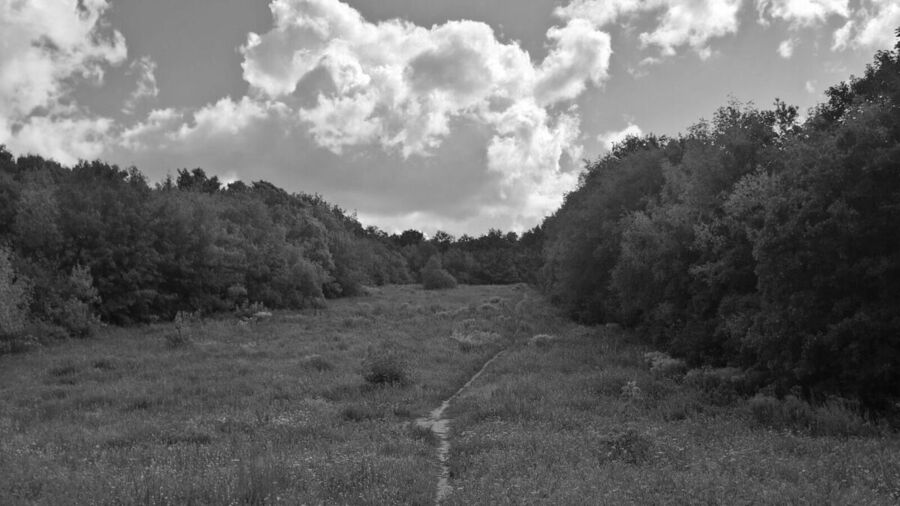
The first night, we had no choice but to camp wild. Schwarzzelten, which is not permitted in Germany, which we knew, which we did anyway because the alternative was sleeping on a bench. We found a flat patch of field beside the trail, set up the tent, and went to sleep.
We woke up at 1am to the sound of trotting.
My friend identified them immediately. Wild boars. Not one. Several. I trusted the assessment, as I had never seen wild boars before. We could hear them circling the tent, their feet landing heavily on the ground, close enough that we could feel the vibration. We could not see anything. Just darkness, and sounds, and the very thin fabric of a tent between us and whatever was out there.
We sat completely still for three hours. Did not speak much. Did not move much. At 4am, they left. At 5am, when the first light came through, we packed the tent in silence, left the field, and walked away without making our morning coffee. We were rattled. That night has never fully left me.
Twelve years later, I found myself in Grunewald, in the dark, running up and down a 23-meter slope for the sixth consecutive hour, doing my best to convince myself that the sounds coming from the bushes were probably just the wind.
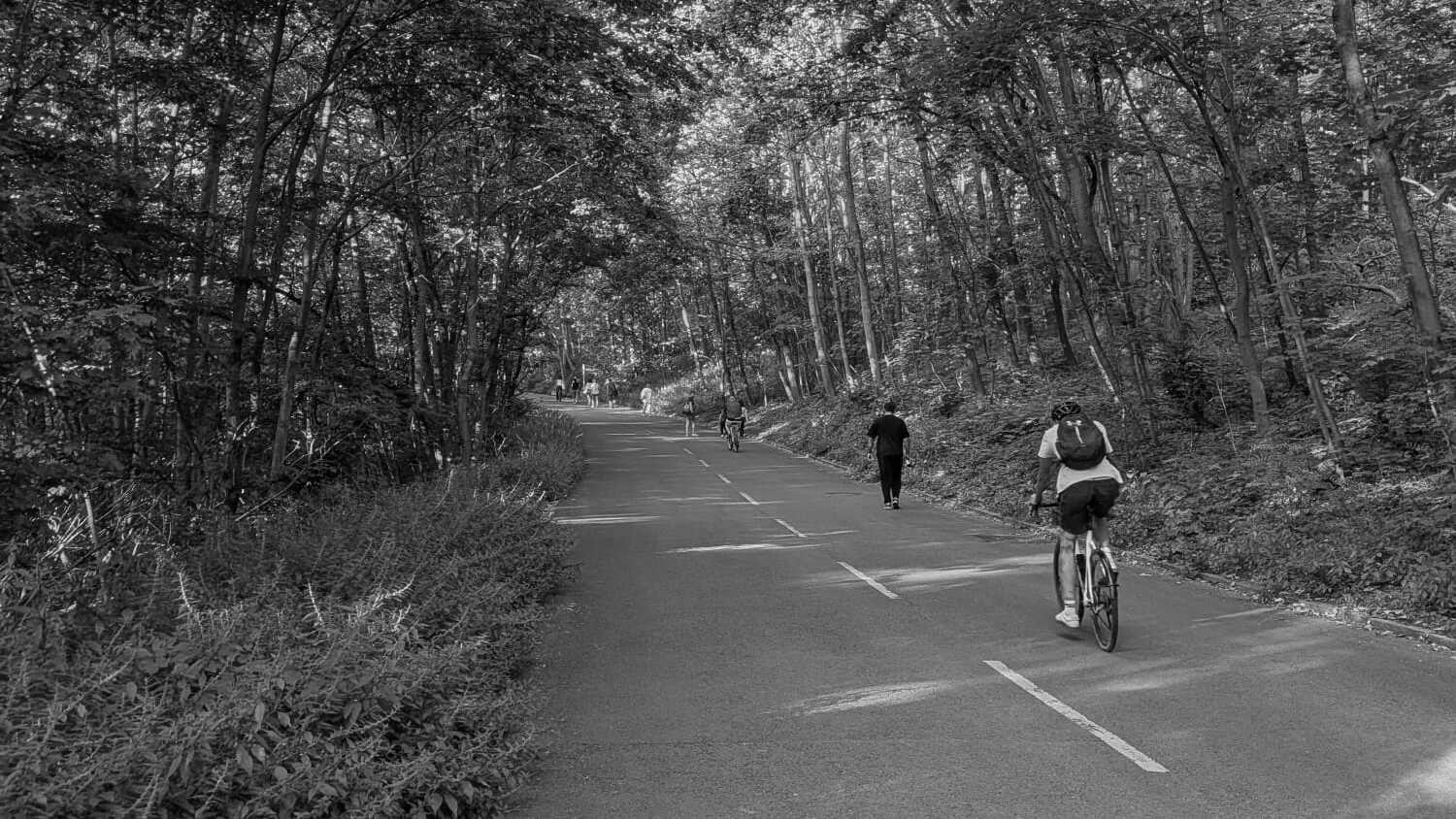
The event was the Berlin Trail Runners Everesting challenge: accumulate 8,848 meters of vertical gain, the height of Mount Everest, by running the same short slope repeatedly. A fellow member of our group had proposed the idea and chosen the location, the Winter Rodelbahn am Drachenberg, a 340-meter out-and-back in Grunewald with 23 meters of elevation per pass.
Berlin is one of the flattest cities in Europe. If you want vertical here, you repeat what little you have until the numbers add up.
We started at 20:00 on a Friday, roughly fifteen of us, with good energy and the kind of pre-event optimism that does not survive contact with reality. My quick calculation before the start told me I could be done by noon on Saturday if I averaged around 7 kilometers per hour. I share this calculation now purely as evidence of how wrong a person can be.
The elevation measurement was its own problem. Strava and Garmin gave me different numbers on distance and vert over this short route. The last thing I wanted was to reach what I thought was a milestone, only to have Strava apply its tax and knock me back below it. So I started pressing the lap button on my Garmin every time I passed the base, and manually tracking every ten laps to verify the cumulative ascent. This is the kind of meticulous behavior that, in the daylight, feels prudent. At 2am, it feels like a punishment you have designed for yourself.
I had three concerns going into the night. The elevation measurements. The noise we might make, since running in Grunewald is permitted but we did not want to draw attention. And the boars.
I knew they were there. I had trained alone in Grunewald many times, usually in the early mornings, and more than once I had come around a corner and inadvertently spooked a group of them. The sound of a dozen boars scattering in all directions through dark forest is not something you forget. We had food at the base table, carefully stored in plastic boxes, with strict rules about garbage. But food is food, and boars are boars, and no amount of careful packaging fully quiets the imagination at midnight.
I was the first person to turn on a head torch. I kept my peripheral vision on the bushes every time I reached the top of the slope, the point farthest from the base.
By midnight, most of the group had reached their individual milestones and gone home. We were four. By 1am, we were two. The slope that had felt manageable with fifteen people felt considerably longer now.
Being only two at the end, we developed a system: one of us at the base, one at the top, rotating to maximize the amount of human presence near the food at all times.
My stomach had stopped cooperating. The mosquitoes had found us. Sitting at the base meant being eaten alive, but moving at the pace I was now moving at was nearly as bad. I was counting loops I no longer wanted to count, through a forest I no longer wanted to be in, at an hour when every sound from the trees required an assessment.
This is where I discovered two things that will be going to Greece in September.
The first was aguapanela con limon. Panela is unprocessed sugar cane, something I grew up drinking in Colombia, particularly in the hot river valley regions where my family is from. I had found panela blocks in Spain and realized I could carry it across Europe. Lukewarm, slightly sweet, with lemon. At 3am in Grunewald, it was the only thing my body actually wanted. It went down easily, stayed down, and felt more pleasant than a artificially-flavored iso mix.
The second was ginger salt pills. When my stomach went sideways, one pill brought it back within ten minutes. I have spent years managing GI issues in ultras. The ginger salt pills are the simplest, quickest solution I have found.
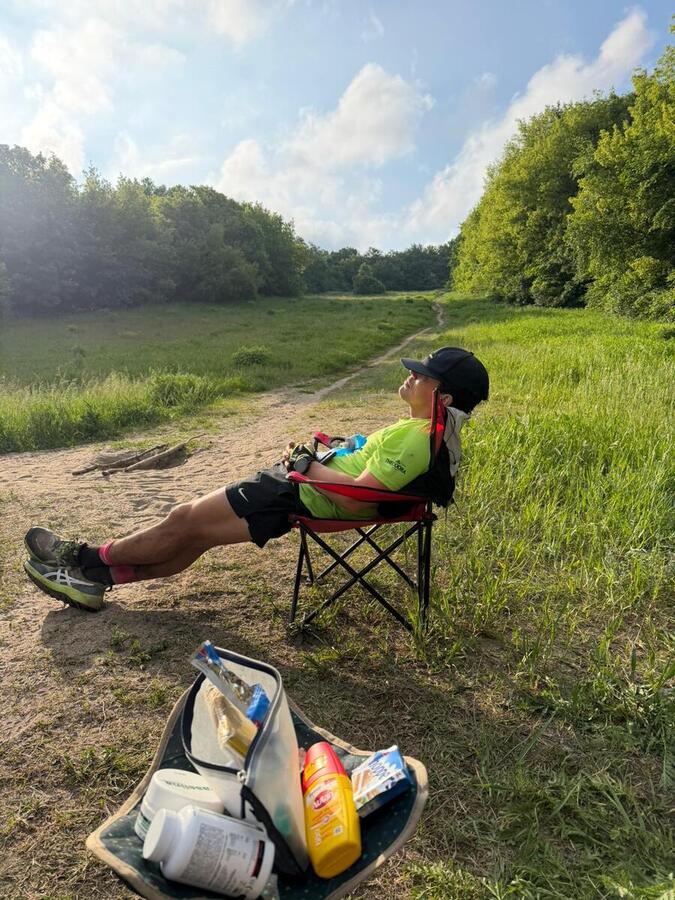
By 6am, I could see light and calculate that finishing the full Everesting would take another twelve hours, at least. I made a decision I was entirely at peace with: I would run until noon and stop. This is not the kind of decision I agonize over anymore. An honest half Everesting is more useful than a broken full Everesting. Specially this early in my training to Spartathlon.
The morning brought more runners, people from the community arriving to attempt their own milestones, friends coming to cheer, and the occasional passerby who stopped to ask what, precisely, we thought we were doing. The energy lifted. The forest became a forest I remembered again.
I stopped at 74 kilometers with 5,012 meters of vertical. My Garmin said 5,012. Strava said 5,012. No tax. The numbers agreed for once.
There is a footnote to all of this that I think about when I consider the night section of Spartathlon.
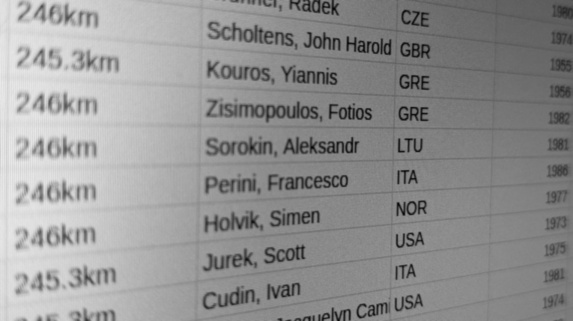
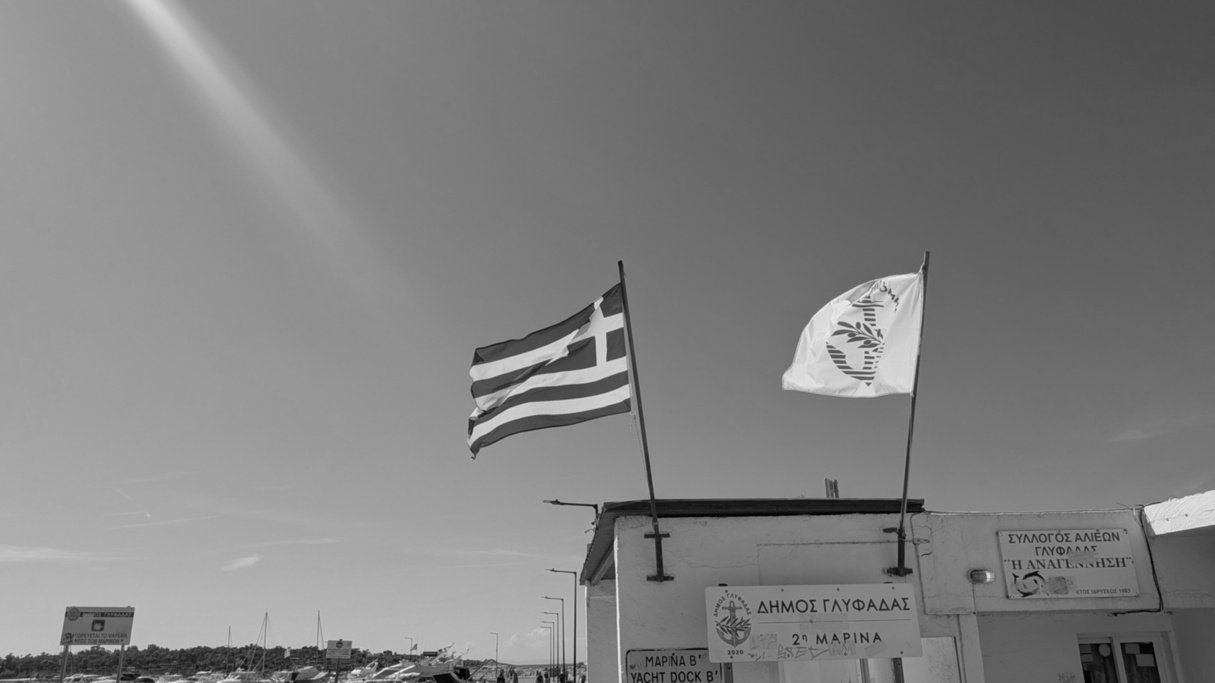
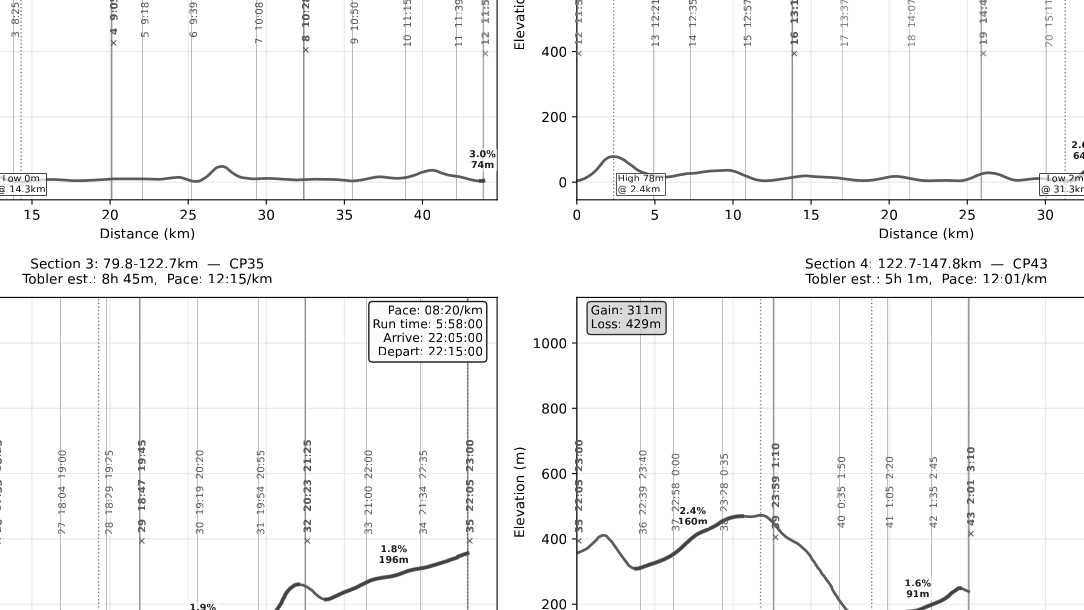
The race does not permit music. Most of the route runs alongside open traffic, so headphones are out. This means that whatever is going through your mind in the dark, at kilometer 180, somewhere in Greece at 3am, you are alone with it. No playlist to drown it out. Just the road, the sound of your own feet, and whatever your imagination decides to do with the darkness. Pheidippides, the courier whose run this race retraces, reportedly met the god Pan somewhere along the way. Let’s see what we find.
Whether or not the Everesting challenge extends as preparation to Greece, I cannot say. But I am choosing to believe that the Grunewald night counts as training.
For the running, yes. And for everything else too.