

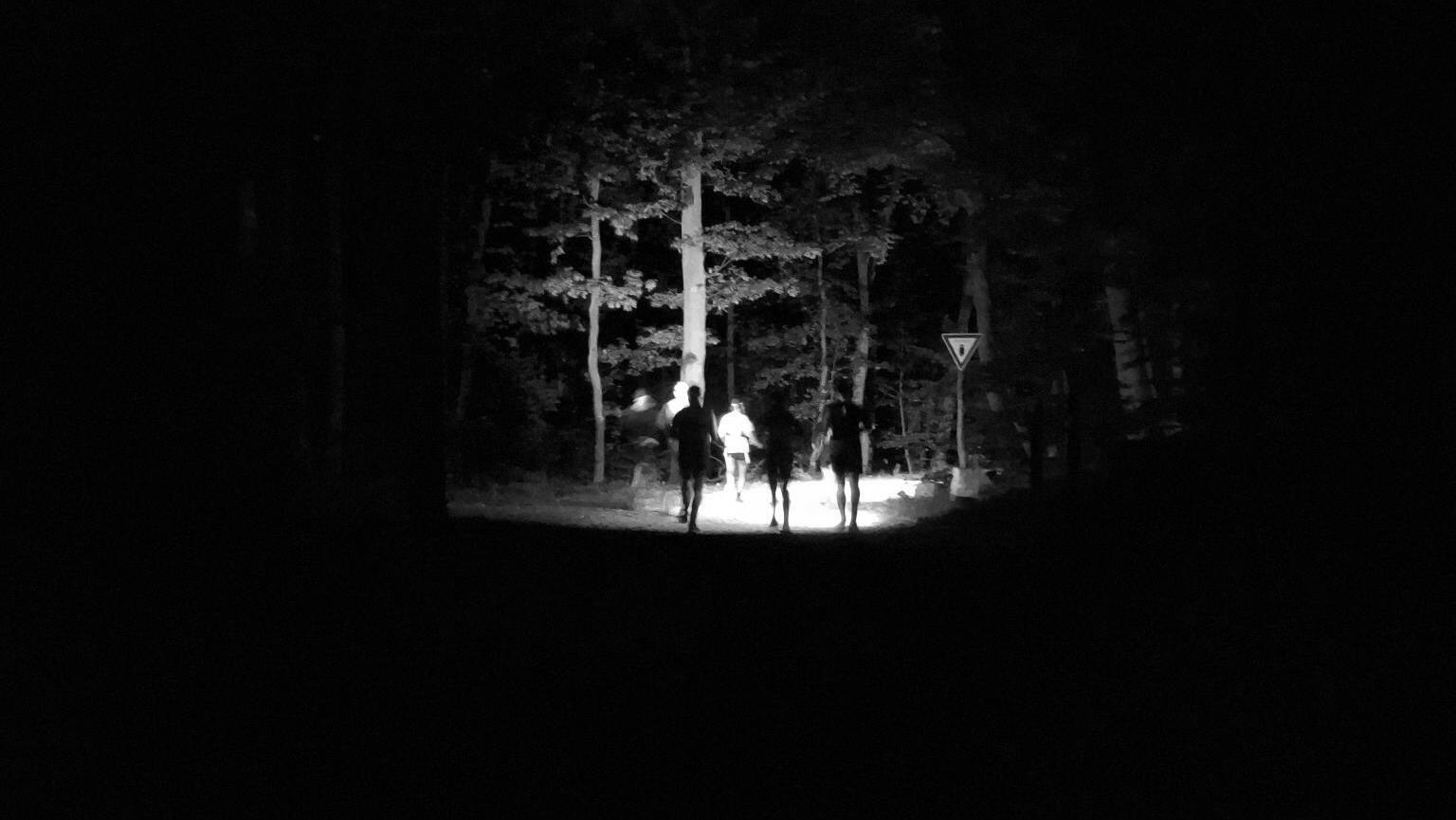
If you are anything like me, you open Instagram and you would find countless running influencers, talking about workouts, the intervals, the tempo runs, the long runs. Everything they do to achieve that sub 3 marathon or their preparation to that 100 milers somewhere in the mountains. Those matter. But, in my opinion these sessions are not the hard part. The hard part is everything around them.
Let’s start from the beginning. Volume is the foundation most of your adaptation sits on. Without kilometers, the structured sessions have nowhere to land. Thus, hitting your weekly distance, however you break it up, is the bare minimum to achieve your goals.
So the real question is not what to run. It is how you run all of it when you also have a job, a family and a community you would like to keep and take care of.
The actual time cost
Right now my training, running and cross training combined, averages no less than 17 hours a week. That number already sounds like a lot. But it is only the part that happens while I am moving.
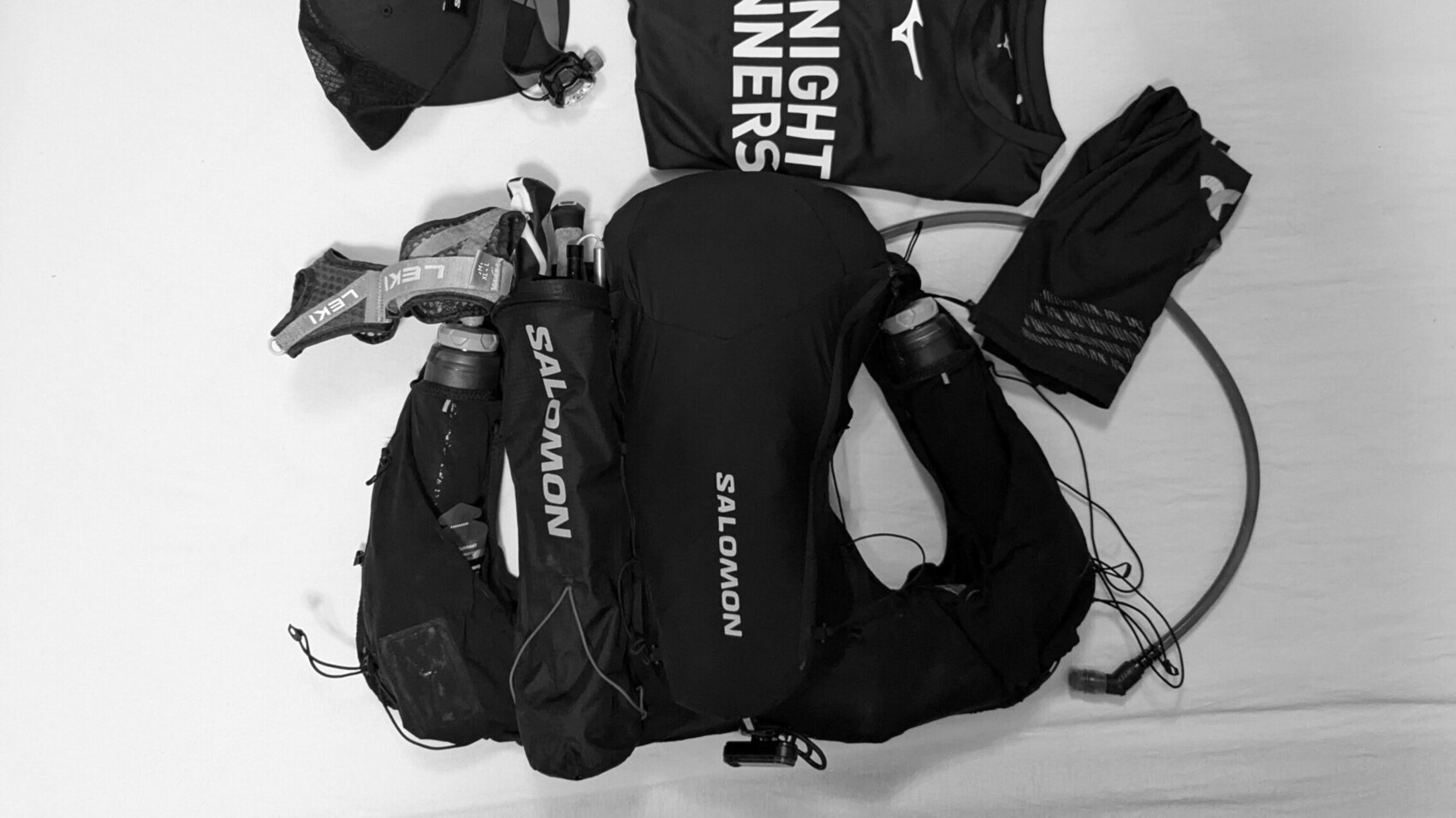
Add the commuting. To the trailhead, to the track, to the park, to the gym, to the spinning class. Add everything before I even leave the house. Fueling, preparing flasks, washing another load of running clothes. Then add the fact that I am constantly tired, which means I need to sleep more than I used to in order to recover properly.
What you are left with is not much time, and in the time that remains you are not fully functional, because you are sore and your brain is foggy. Managing the whole thing becomes genuinely difficult. What follows are small things that help me stay sane and on schedule with training.
One day off, regardless
I take one day off activities every week, no exceptions. I enjoy running, and I know I would happily do more of it. The day off is what protects that. It gives me time away from running so I do not start to resent it.
It is not always a day of nothing. I might schedule a short strength circuit, or a sauna session, but nothing beyond that. The point is to avoid getting fed up with the thing I am supposed to want to do.
Plan the week before it starts
A calendar is not optional at this volume. Before the week starts, I already know how much I plan to run across it. If I have other commitments, I plan the running blocks around them rather than hoping they fit.
And it is not just the runs that go on the calendar. It is everything attached to them: commuting, prep, sleep. Blocking the run without blocking the hour of travel on either side is how you end up with a plan that was never feasible to begin with. The first question is always whether the weekly volume is actually possible given everything else. If it is not, better to know on Sunday than on Thursday.
Always have a plan B
Life catches up with you, and when it does it should not cost you the whole training session. A plan B is what keeps a bad morning from becoming a missed day.
An example. If the plan was elevation on the trail, and I cannot get to the trailhead because I am stuck waiting for someone to come fix the internet, I know I can still get some of that climbing done with hill repeats at the nearby park. It is not an elegant substitute. But it is far better than skipping the day entirely.
Lists, lists, and lists
High volume means I do not have spare mental overhead to remember everything, and the small misses are the ones that hurt. I have gone out for a long run in the sun and forgotten my salt pills. I have taken the train out to the forest and forgotten cash, which I needed to buy a refill at the local store because they do not take card. Small things, easily missed, each one capable of ruining a session.
So I keep simple lists on my phone (Google Keep works for me) and I go over the relevant one before leaving home. One for long runs, one for trail runs, one for the gym, one for the spinning class. Water, fuel, weather forecast check, wet wipes, enough battery, heart rate monitor. Nothing clever. Just a simple mindless check before the door.
The complementary habit is getting things ready the night before. I prepare my flasks every evening, whether or not there is a run tomorrow. They won’t go bad, trust me. The whole idea is to make getting out the door on the day as easy as possible, because that is the moment where motivation is thinnest.

Fold running into the life you already have
The more running overlaps with the rest of my life, the less it competes with it. Whenever I can, I run home from the office instead of taking transport. That is one session that costs almost no extra time.
The same logic applies socially. If friends are celebrating a birthday across town, I ask whether I can shower at their place, carry a change of clothes in a ziplock, and run there instead of doubling back home first. If friends want to hang out, I invite them for a jog, because you can hold a conversation at an easy pace and quietly fit in one more zone 2 session. Better still, join a running club, and run to and from the meeting point to add distance on both ends.
Now, I am not a parent. But I have often seen parents out there, giving it all. For example, when I go on long flat runs on the Mauerweg in Berlin, I often see parents with their children on strollers. There are stroller types that are specially adapted for running. I make sure to cheer on these runners as they pass by, for their commitment is exceptional and serves as an example to all of us.
Finding what the map is hiding
Sometimes volume alone is not enough and you need elevation, which in a city as flat as Berlin is its own problem. Strava is the tool I lean on here.
Under Strava segments you can filter by elevation, and the results will surprise you. I live very close to Volkspark Prenzlauerberg and it never occurred to me to train there. It was not until a race was held in that park that I discovered a loop with an elevation coefficient of 76.9, right on my doorstep. You may have loops near your home you have never noticed, and segments are how you find them. Now, when the Grunewald is not an option, the park stands in for it.
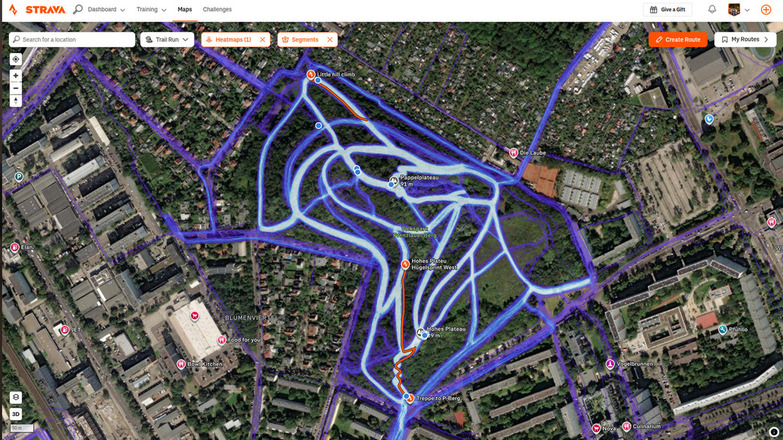
The same strategy works out of Berlin. When I am away from home, I build routes on the go so travel does not cost me the training. Ultimately, when I am unsure of an area, I find a local running club on Strava and post on their page asking for recommendations. It has worked every time.
Complementing all of this with a good watch helps, Garmin or otherwise. What matters is easy navigation on a clear display, reliable GPS and battery.
None of this is elegant. But it works more often than you would expect, and it is the difference between a plan that exists on paper and one that actually happens.