As mentioned before, bad breaks do not find us more often than good ones. We just remember them longer. So before I forget, I want to write down the good breaks. In the first 100 kilometers, there were three.
The Preamble
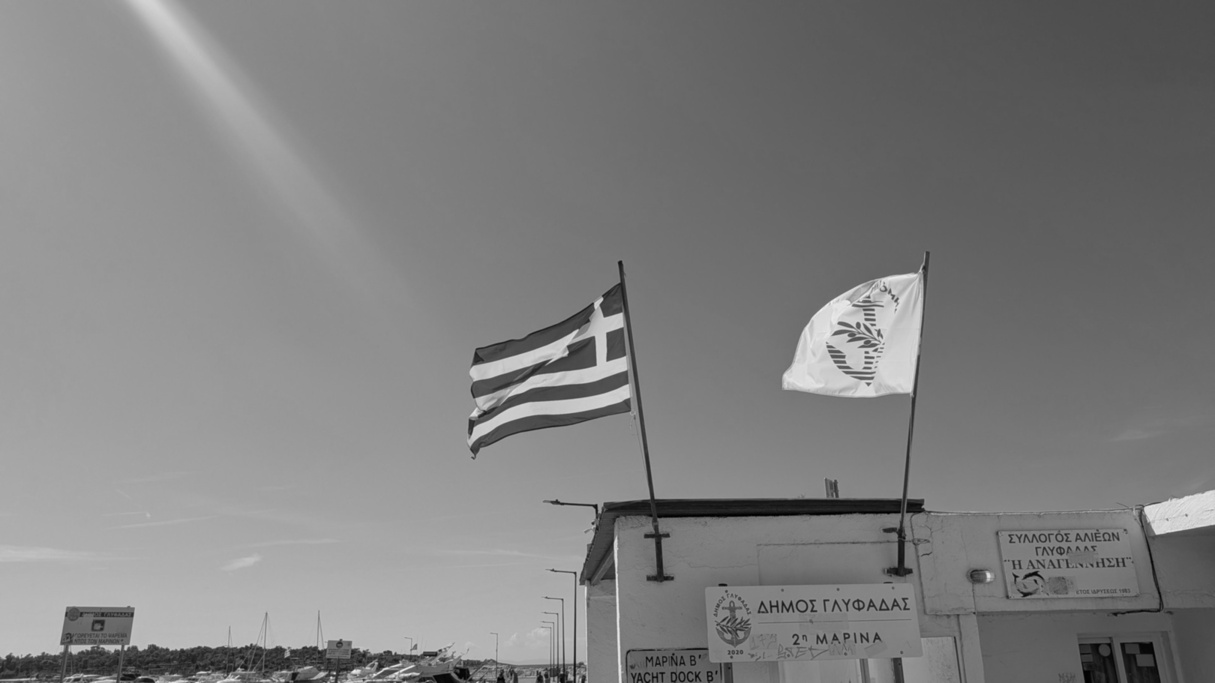
On Friday morning I went for a shakeout along the coast in Glyfada. I felt heavy from a week of pasta, but fully operational. From the beach I could look west along the bay, toward the road we would be running the next day.
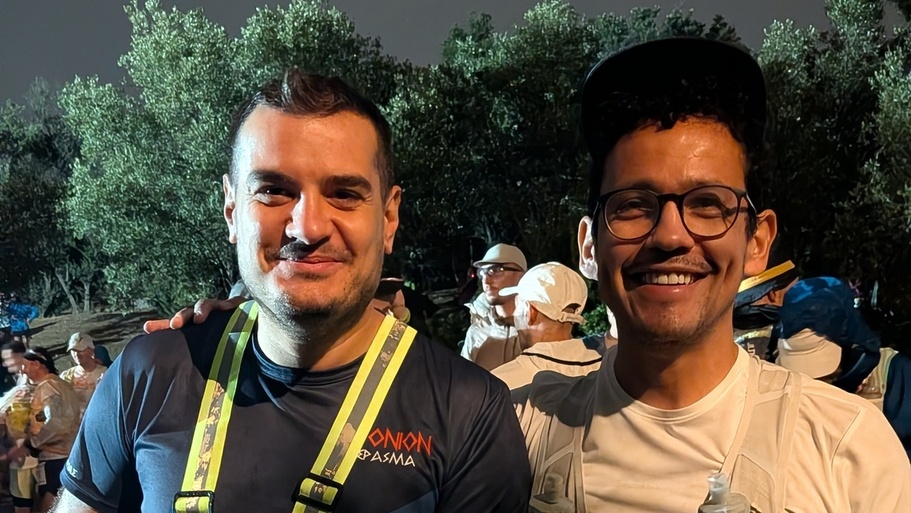
Lefteris was my crew for the race. We met at the pasta party of the Mauerweg in 2024. He asked if I had a goal for the race. Twenty-one hours, I said. Me too, he said. Right there we both knew what we were after: a Spartathlon qualifier. He made the time and has applied two years in a row without getting in. Greek runners face far more competition for a place than those of us lucky enough to come from countries with only a handful of applicants. Since then we have run ultras together across Europe, and I could not have thought of a better person to have by the road. He is a local, and he knows what Spartathlon is like.
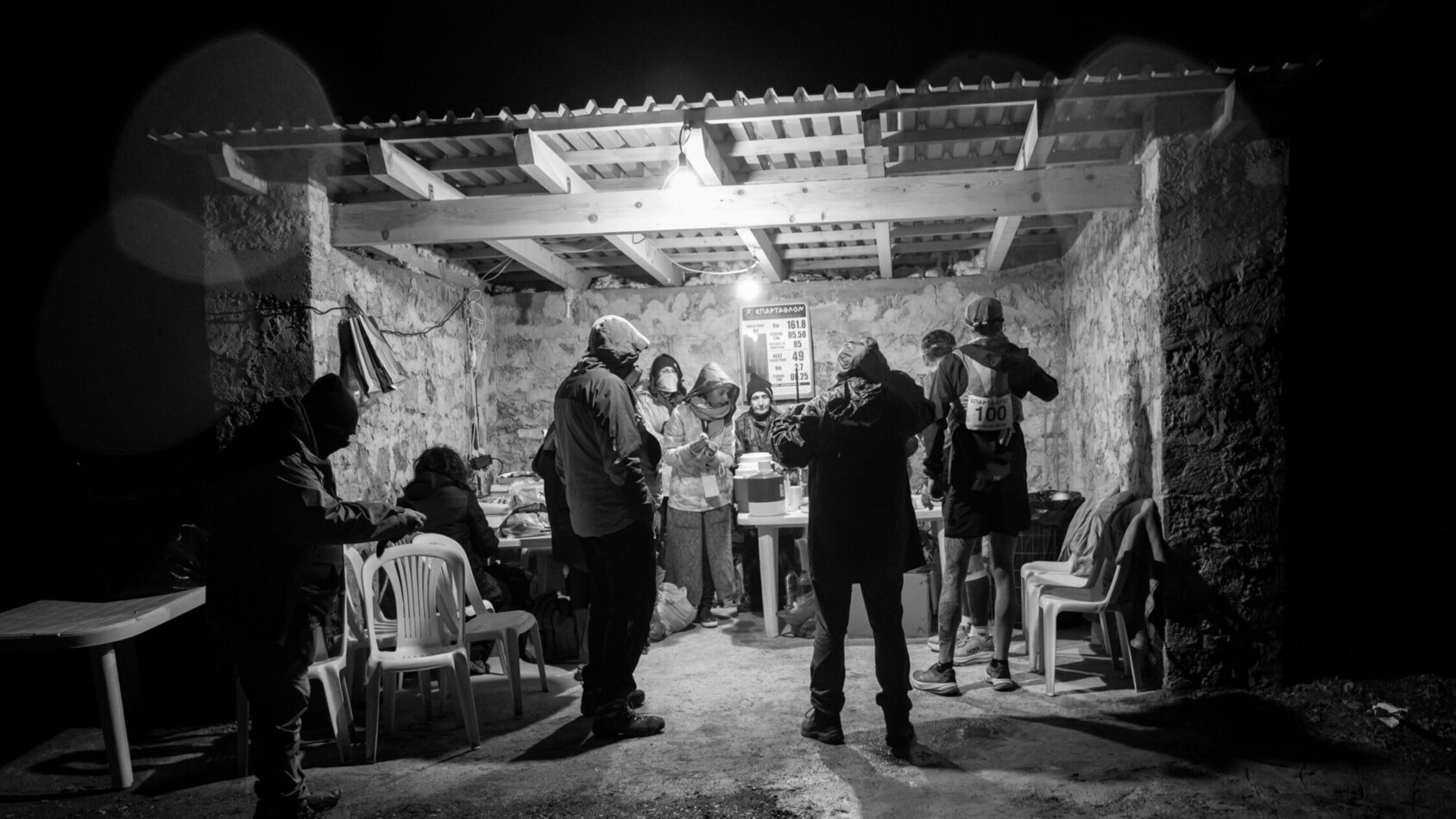
Later I met him at his place, where he had volunteered his kitchen. We filled ziplock bags with servings of panela and MNSTRY carb mix, cooked the food, and went over the crew stops and arrival times. I suggested he skip one stop between 22:00 and 4:00 to get some sleep. He refused. We would meet at every stop possible, and worst case, he would sleep and I would sort myself out.
Back at the hotel, in a room for four I had all to myself, I forced down a small portion of plain spaghetti. The two nights before had been bad. The toilet repair in Berlin was holding, but the stress had moved to my stomach as acidity. My biggest fear was that some carb mix during the day would make it worse. I took an antacid from the pharmacy, put on an audiobook, and was asleep by 22:00.
The alarm went off at 04:50. I had slept through the whole night. Thankfully.
Rain at the Acropolis
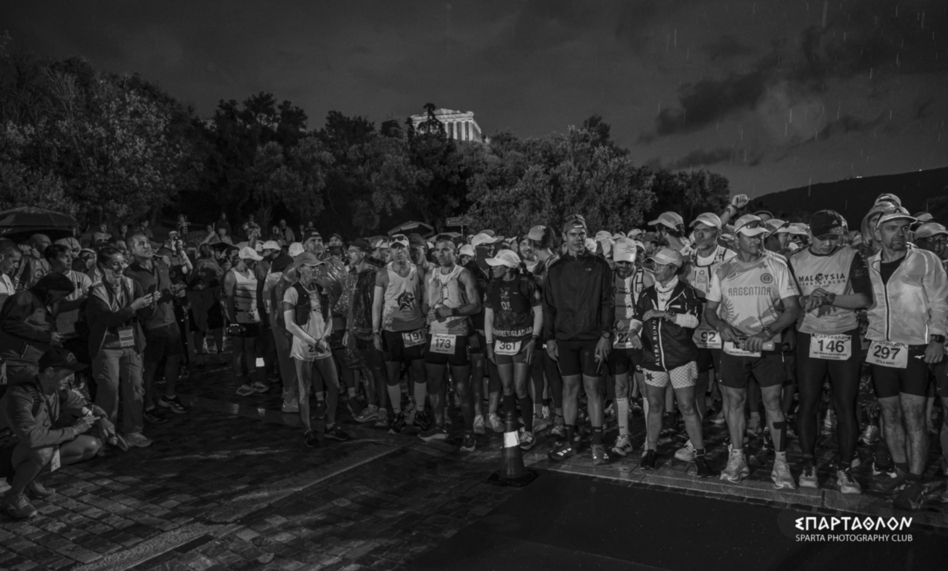
I took one of the buses to the Acropolis and followed everyone else to the start.
Then it started to rain. I had watched the forecast all week: 26 degrees, cloudy, no chance of rain. Runners pulled out ponchos. It cannot rain for long, I thought.
Lefteris found me, took my glasses, and we jogged a few hundred meters away from the crowd. When the countdown started, I was surprised by how calm I was. The one thing I wanted to settle was how bad leaving Athens would be.
A year earlier, Lefteris and I ran Pistoia-Abetone, a 50k in Italy that, as I found out at the start, runs on open roads. We spent hours on the shoulder of a two-lane road with cars passing fast, some drivers in full road rage. At the finish, Lefteris said: you know Spartathlon is like that, right?
Leaving Athens
I settled into 6:00 pace with most of the field ahead of me, crowds cheering and police holding traffic off the road. At the first checkpoint stood the men in sailor uniforms I had seen in so many Spartathlon videos.
Then the city ran out of patience. Somewhere around kilometer 9, the police had closed a three-lane road just to let us through, and the drivers stuck behind it started honking and did not stop. I was glad I had been warned.
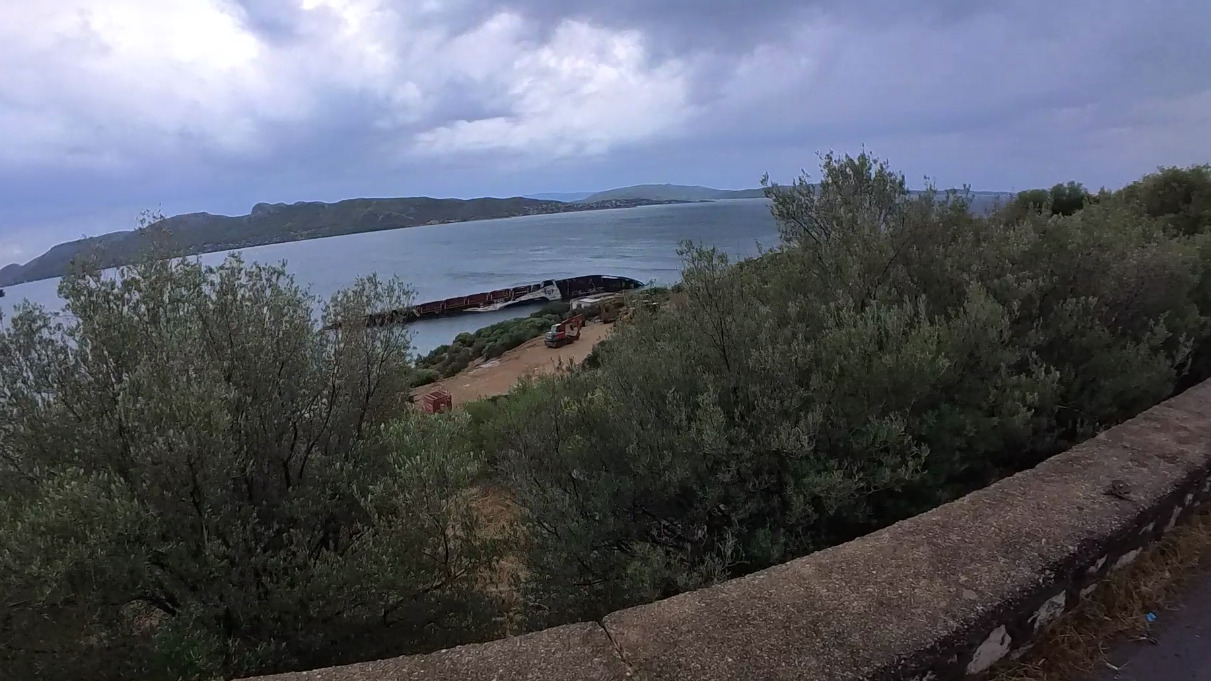
The first 20 kilometers were factories, refineries and military facilities, in rain, with sunglasses I regretted bringing. At Loutropyrgos the industry gave way, the sea appeared on the left, and for a while I forgot about the rain. Shortly after came the sunken ship, another sight I knew from the videos. I did not know then that it would be one of the most beautiful views of the entire race.
Lucky break number one
Entering Megara, a car pulling out of a side street nearly hit me. I do not blame the driver. By then we looked less like an iconic race and more like random runners.
I had asked Lefteris for coffee at our first meeting. I have never managed more than 65 kilometers without a bathroom stop, and the plan was to make it there. But the urge came early, and I slowed to a walk to manage it.
At CP11, I asked if they had toilets. A volunteer pointed me to a supermarket across the road and warned it would cost me time. I kept going, hoping to hold on. I picked up the pace again, but I could not keep up.
Leaving town, I saw a portable toilet on the roadside, about 200 meters ahead. Probably a construction crew’s. It was unlocked. Inside, it was spotless, with toilet paper. Lucky break number one.
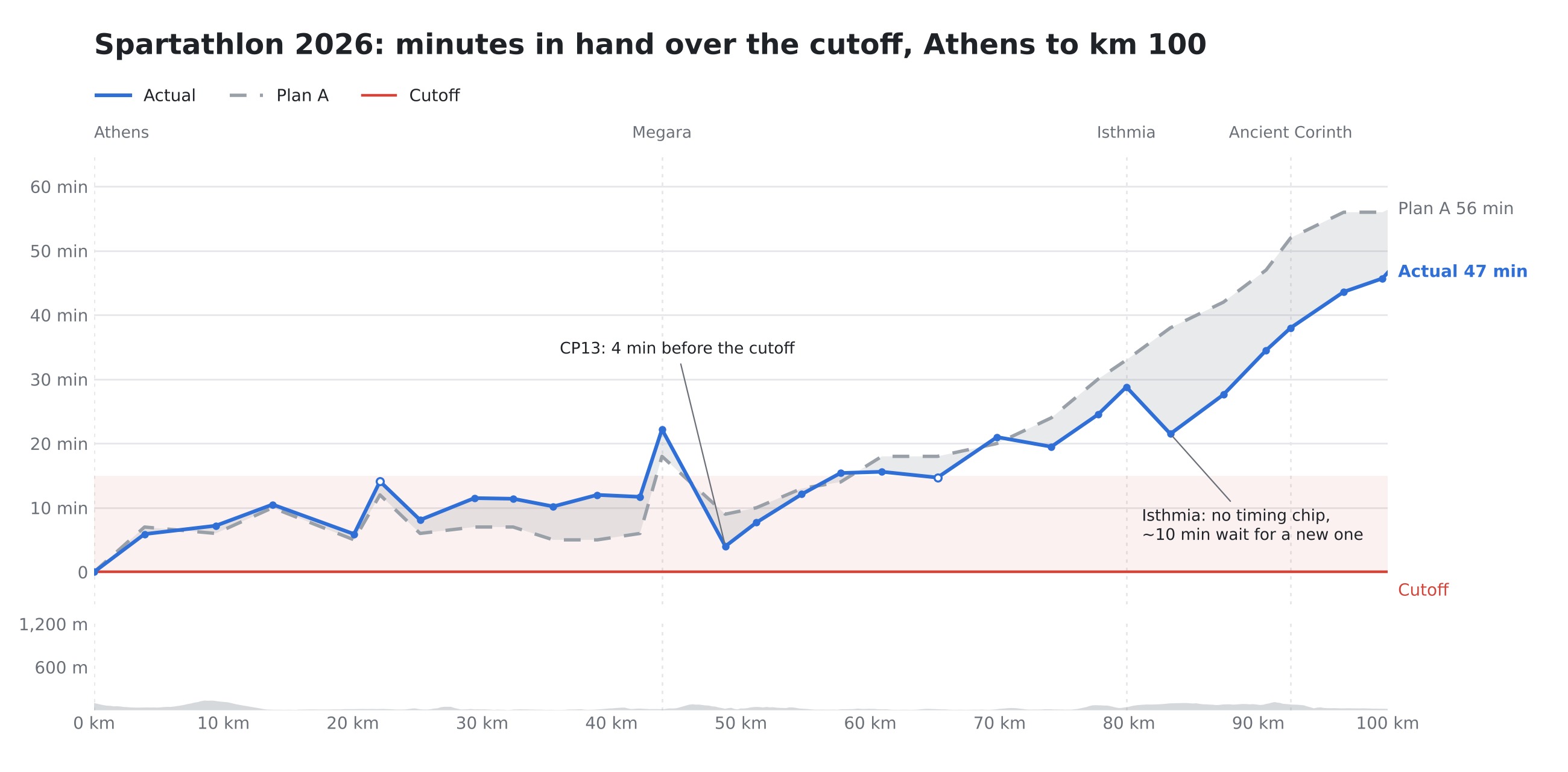
At CP12, our first crew stop, I changed clothes and shoes, grabbed a couple of rice balls, and left just a few minutes behind Plan A. All systems operational.
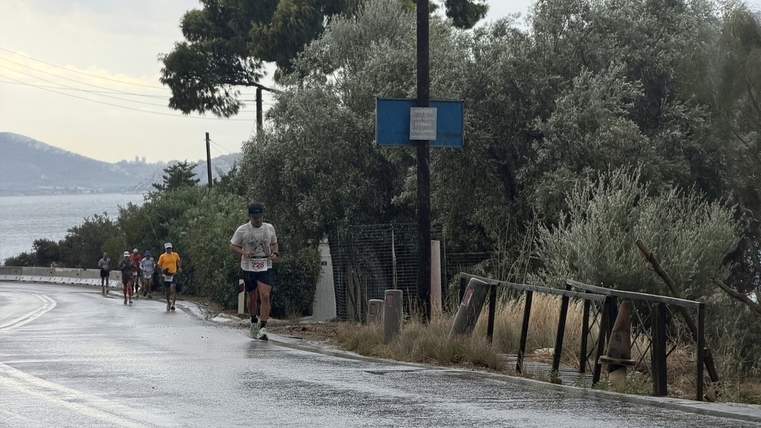
Four minutes
I walked out eating the rice, and kept walking because the road went uphill. Then I checked my notes against my watch. Plan A at CP13: 12:21. Cutoff: 12:30. ETA on my watch: 12:33.
I was outside the cutoff. Hadn’t I accounted for this climb? If I got this wrong, what about the next 200 kilometers?
I pushed harder. The ETA did not move. I passed runners with resigned faces. Mine was pure anguish. At the top I let go and ran the descent at 4:00 per kilometer, staring at my watch for a kinder number. A runner from New York called out “nice pace” as I passed. I would see him again in the night.
I reached CP13 four minutes before the cutoff and kept going.
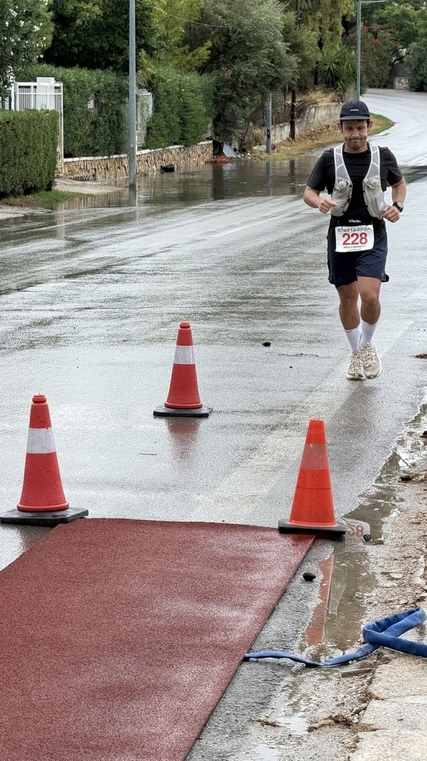
Of the next hours I remember very little, apart from the sea on the left between buildings. At CP16, kilometer 57, a volunteer helped me fill my flasks. I wished him a good rest of the day. He wished me the same, and a good night. We both laughed.
At kilometer 65, just after CP18 in Agioi Theodoroi, there was a timing mat with a volunteer on each side. I ran over it and it did not beep, so they called me back. A French runner I had been running with on and off stepped on it at the same moment. It beeped, and we both went on. I did not think about it again.
The rain eased. Hotspots appeared on my toes, and at CP19, among some industrial sites, I tried to put plasters on them. Everything was soaked and nothing would stick. As I put the shoes back on, I noticed the time: almost 15:00, the hottest part of the day, and it was 25 degrees with barely an hour of sun behind us. In a race known for its heat, the heat never came. Lucky break number two.

The chip
I noticed the Corinth Canal only because of the tourists cheering on the bridge. I was still watching my ETA.
At CP22, kilometer 80, Lefteris pointed me to the mat. I stepped on it. Nothing.
“Where is your chip?” an official asked. I pulled out my GPS tracker. “No, the white chip.” He made a face that meant I was in trouble. I told him I had beeped at kilometer 65. Did you cross with another runner? he asked. I had.
Lefteris sent me to the car while he talked to the officials. The blisters were already there. I drained them, and since plasters would not hold on wet, soft skin, I taped over them with stiff cloth tape.
The official came back. I said I had never received a chip. They said it was in my registration documents. I had read the rulebook. I had watched the technical briefing the night before while mixing carbs. It covered poles, not climbing the statue of Leonidas, and not running naked through Sparta the day after. Nothing about a chip.
They took my GPS tracker and the conversation switched to Greek. As they walked away, I heard the word disqualification for the first time.
I was strangely calm. I was tired already, and a drive to Sparta for dinner did not sound terrible. Worse would be getting disqualified at kilometer 200, after much more of Lefteris’s effort and mine.
The tracker showed I had run the course by the rules. Ten minutes later someone from the organization arrived with a new chip, Lefteris laced it into my dry shoes, and I left, getting used to the tape on my toes. Lucky break number three.
The dog
Ancient Corinth, CP26 at kilometer 92, was beautiful: a pedestrian street lined with cafés, tourists cheering on their way to the ruins. I took a salty drink from Lefteris and kept going.
Then came farm roads, quiet except for crew cars honking as they passed, and a dog that ran almost seven kilometers with me, sometimes behind, sometimes ahead, always there. I made small talk with him now and then.
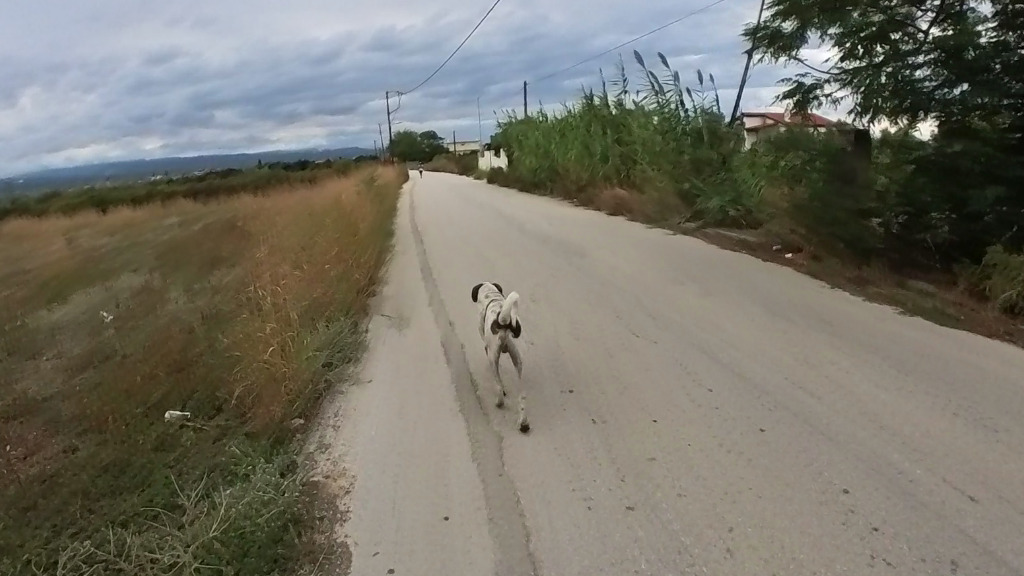
At Zevgolatio, CP29, the town’s dogs came out to welcome him, and that was the last I saw of him. I arrived in a very good mood. I did not know it at the time, because I was not tracking total distance, but it was the 100-kilometer mark. It was 19:00, 13 minutes behind Plan A, and the first time I noticed the plan starting to slip.
Ahead, in the last light, I could make out the outline of mountains. Is that the Sangas pass? I kept wondering.