


I have spent more time than I expected thinking about this topic.
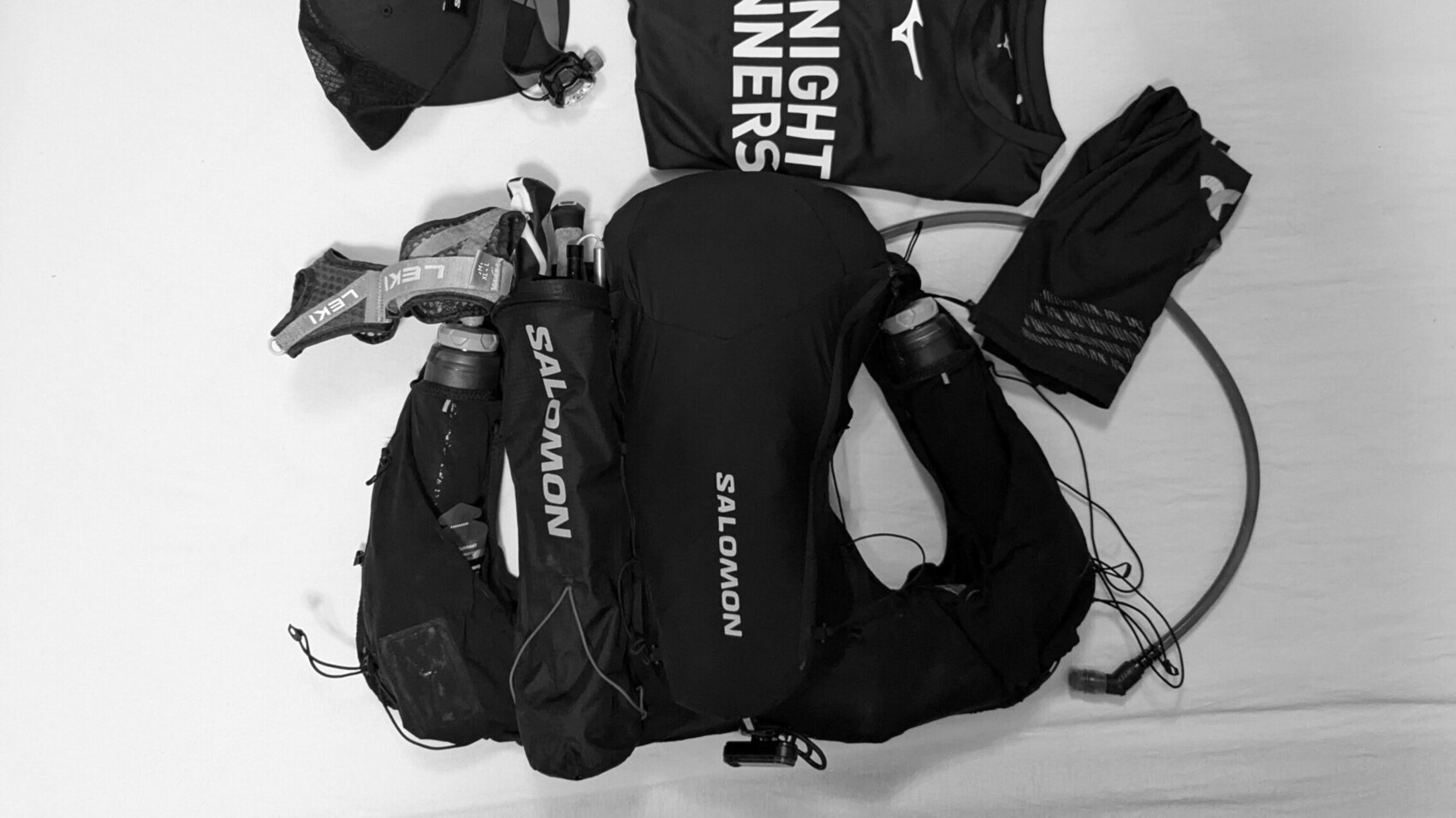
For most of my running life the answer was never in question. I come from trail running, where you show up at the start line already loaded: jacket, flashlight, two flasks, an emergency blanket, whatever else the mandatory kit list demands that year. My Salomon Advanced Skin vest, twelve liters of volume, has been strapped to me for most of the kilometers I have ever run. The only time it comes off is when I am doing repeats on the track. Everything else, it is on.
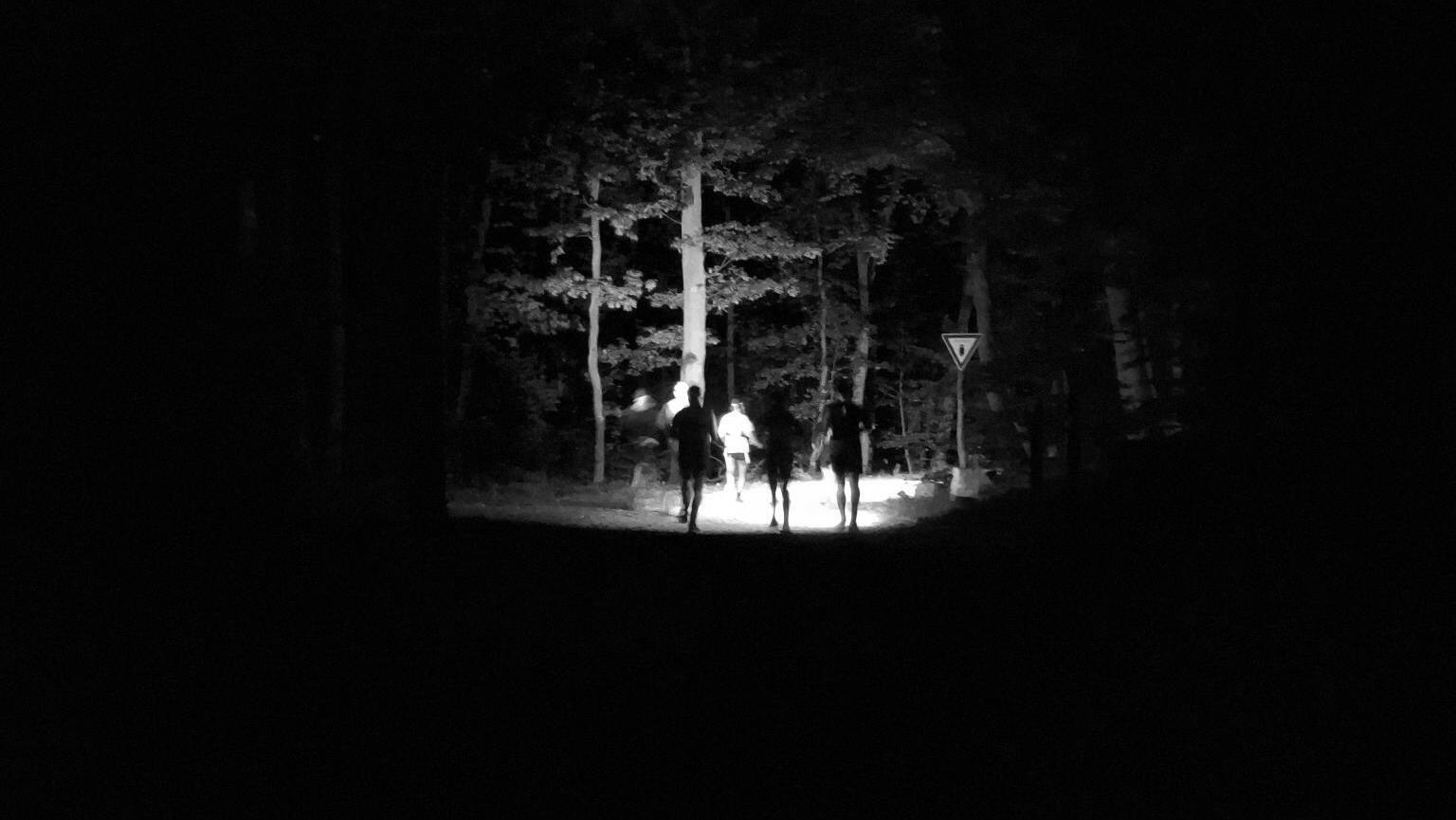
Spartathlon breaks that habit for me. Unlike the trail ultras, with their long mandatory kit lists, Spartathlon asks for almost nothing. According to the rulebook, participants are required to have a head flashlight with spare batteries, reflective gear on the back, and reflective gear on the shoes. And this only applies at night. Other than that, no jacket clause. No minimum water capacity. No emergency blanket. It is a road race with crew access at defined points, so the whole logic of gear changes. On the trail the burden is carry everything, because you may be hours from the next place you can refill. Here the burden moves to your crew: they have it at the checkpoint. That is a very different problem from TransGranCanaria or Mt. Fuji. Still, are people carrying something with them while running Spartathlon?
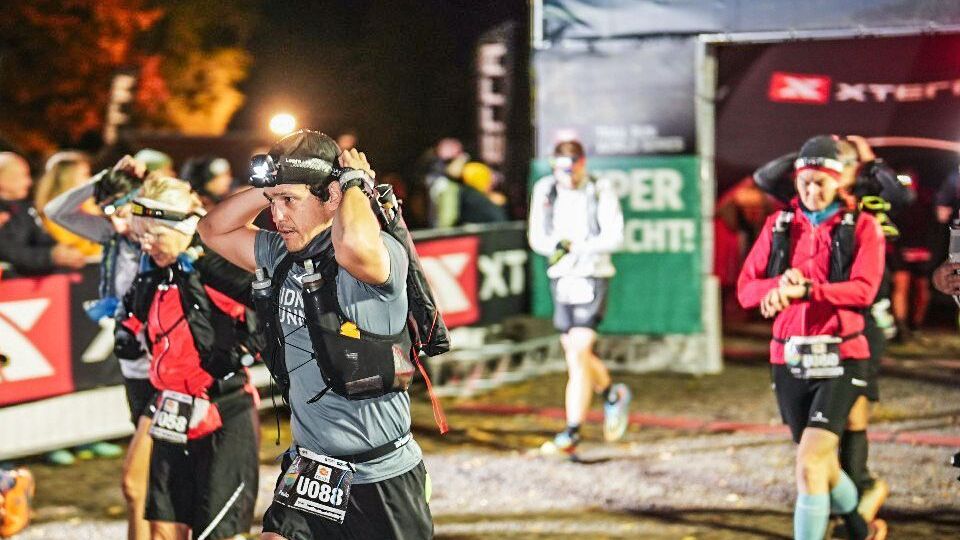
I went on YouTube and started watching race footage to see what others do, and I quickly found the two ends of the spectrum. On one end, runners with a full hydration vest, two front flasks and a bladder on the back, dressed for total self-sufficiency. On the other, people like Fotis Zisimopoulos, the current course record holder, moving with what looks like a small running belt and, only sometimes, a single flask in his hand. Same race, opposite philosophies.
To which will I belong?
The thing pulling me toward the vest is a habit I have never questioned. From the very beginning I have drunk in constant small sips rather than big gulps at long intervals. I think it comes from a simple belief: do not wait for dehydration to arrive in full before you respond to it. A vest holding my hydration up front makes that possible. Firstly, it gives me independence from drinking water only at the aid stations. Secondly, it requires little effort to drink. I tilt my head, squeeze the flask, keep moving, and I never have to think about it. Add the trail habit of carrying more food and water than I strictly need, and the vest becomes the obvious default.
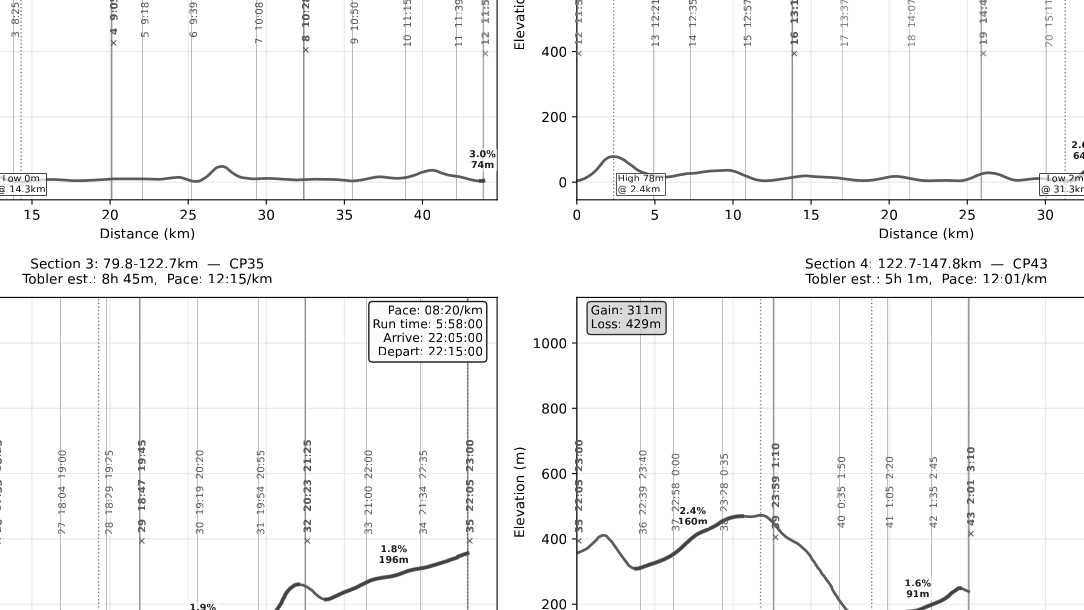
But Spartathlon will be different. To begin with, there will be more aid stations, more closely spaced, than I have ever run with. A total of seventy-five aid stations with different services ranging from water all the way to massages, each station roughly three and a half kilometers from the next. Moreover, for the first time I will also have a crew car, so I am not even dependent on drop bags. The case for carrying a small reservoir of everything on my back gets thin. And there is a cost to that vest: the ones I use for trail sit against my back and add heat to a body that, in September in Greece, will already have too much of it.
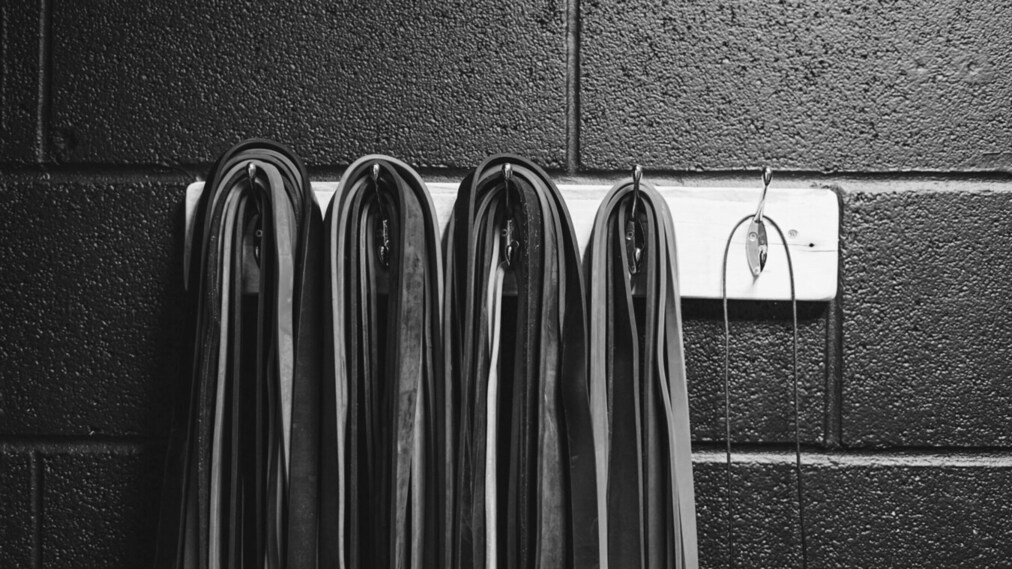
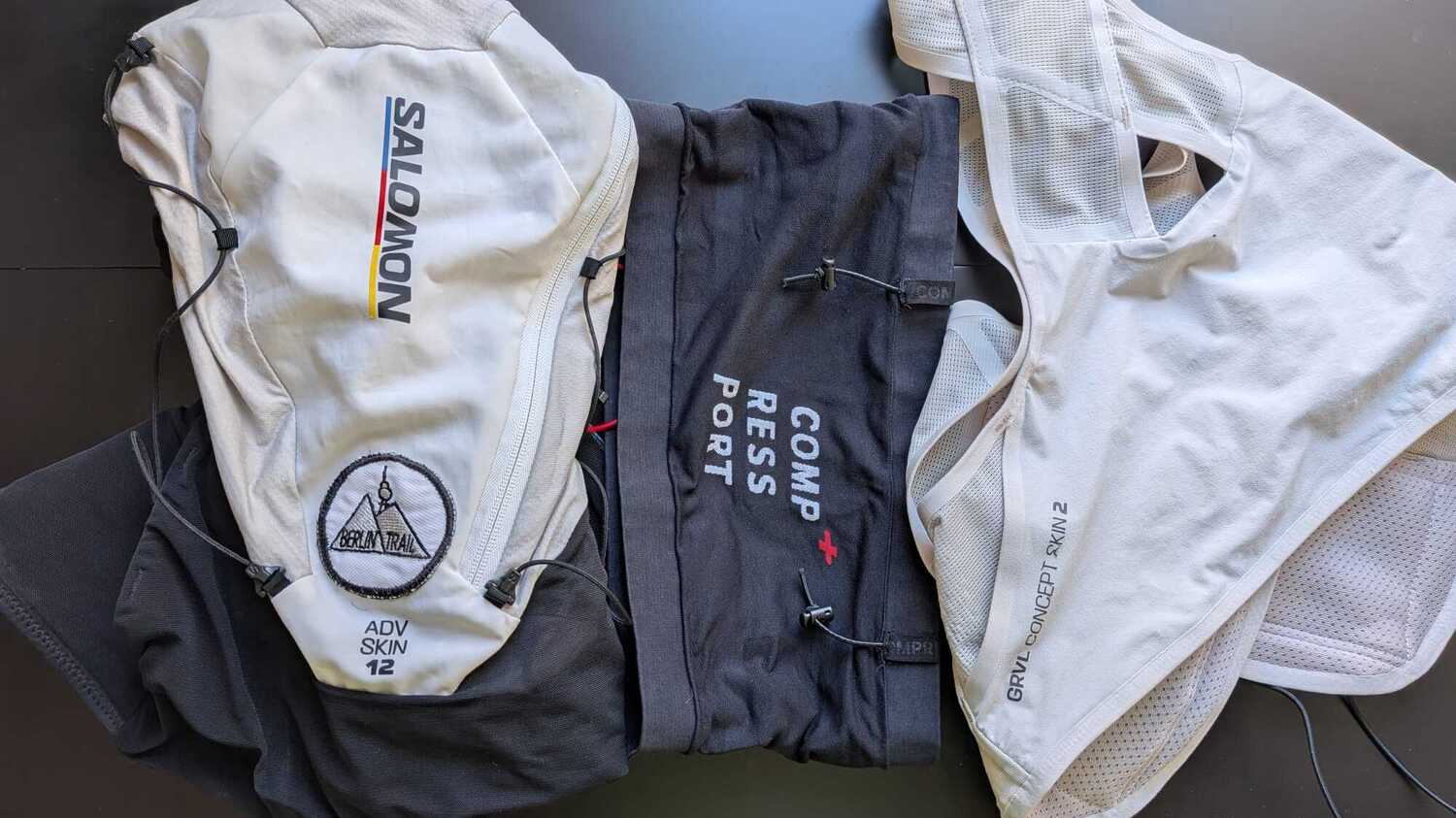
So I started looking at running belts. On paper it is close to perfect: a free back and shoulders, better temperature control, and still enough room for something to eat, a GPS tracker, my phone, the small essentials. I watched a lot of reviews, borrowed belts from friends to feel them on, and eventually landed on a Compressport belt after watching some videos of it in action.
It arrived, I put it on, and it did not work for me.
The problem was not the belt itself. It was the flask. On a belt, I have to pull the flask out, bring it to my mouth, drink, and return it to my waist. That small round trip, hand to waist to mouth and back, is exactly the movement I have spent years engineering out of my running. I could not stop imagining doing it at kilometer 200. I am simply too used to tilting my head and drinking from a flask that is already strapped in place. The compression was the second doubt: convenient over a couple of hours, but I was not confident it would hold comfortably across a day and a half. That was enough. No belt.
Which left me somewhere in the middle, because I also knew I did not want to drag the Advanced Skin 12 to a road race that does not need it.
That is where the Salomon Gravel 2 surprised me. Up front it has the same pockets I already know, so my drinking habit is untouched. The back, though, is open. Instead of a full harness it carries only an elastic pocket above the waist, which is more than enough for extra food, a light jacket, or a phone, without laying a heated panel across my back. I took it out for a long run and it held perfectly. It is the one coming to Athens.
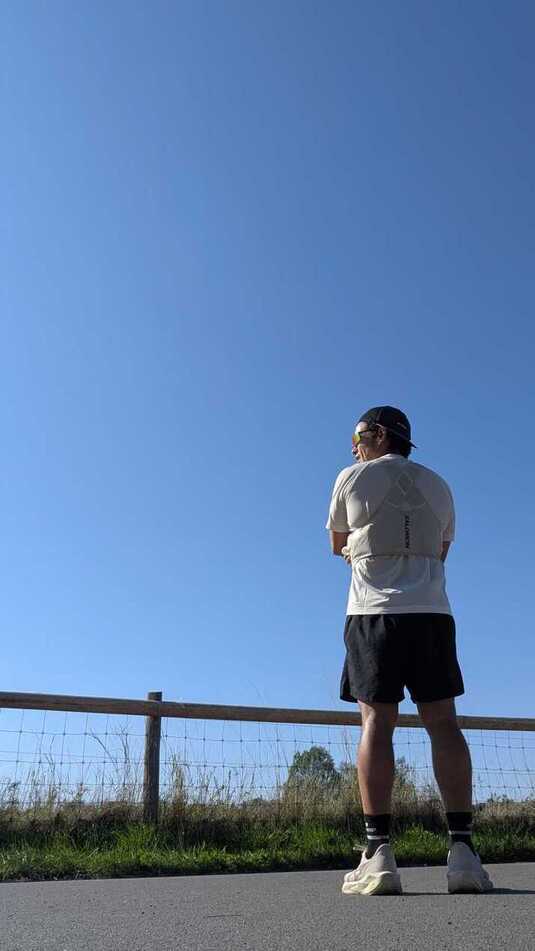
It is interesting that Spartathlon let me question a habit I had never had a reason to question, and the answer turned out to be neither extreme. Not the loaded trail vest, not the minimalist belt. Something in between that allows me water I can reach without using my hands.