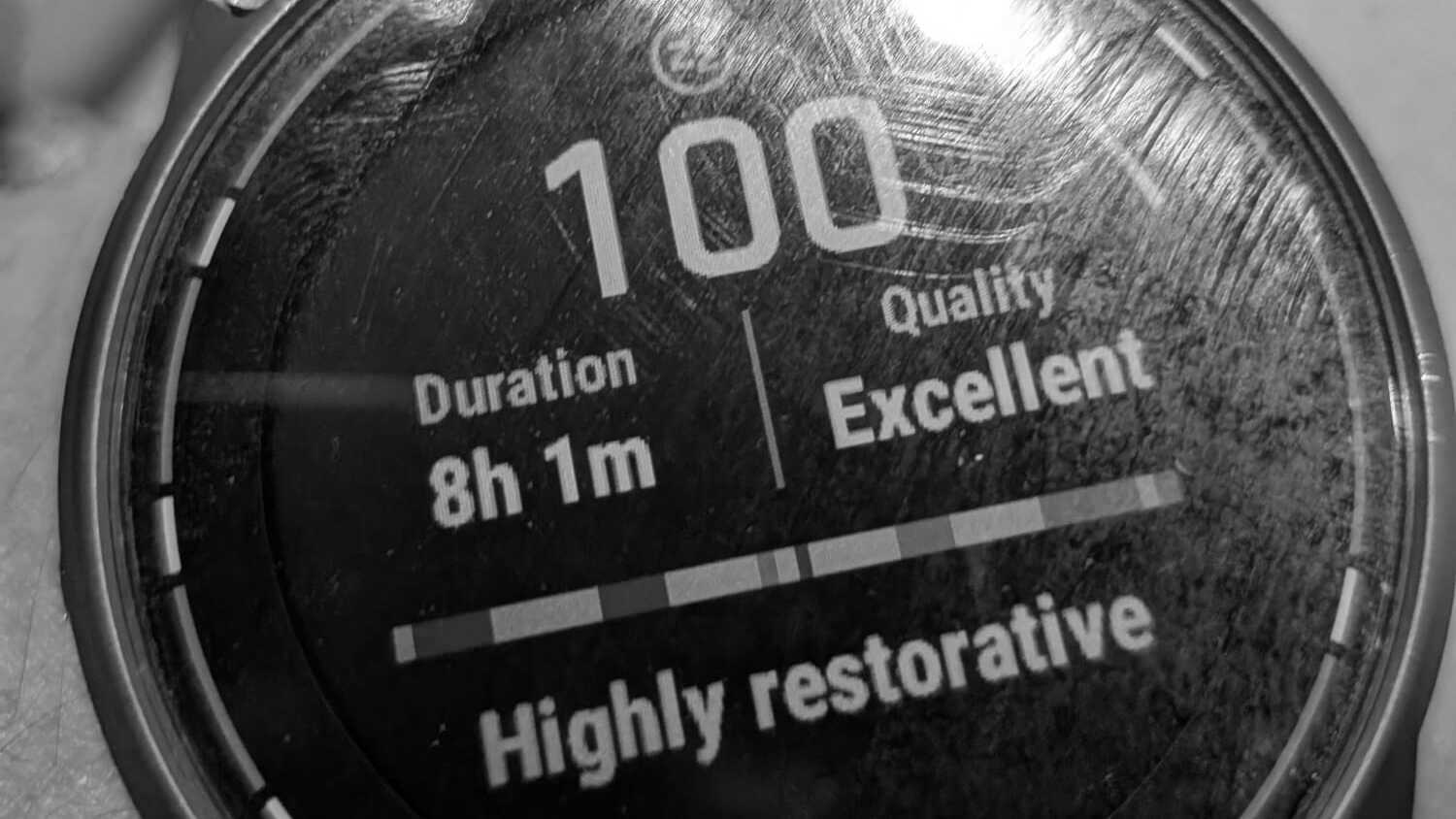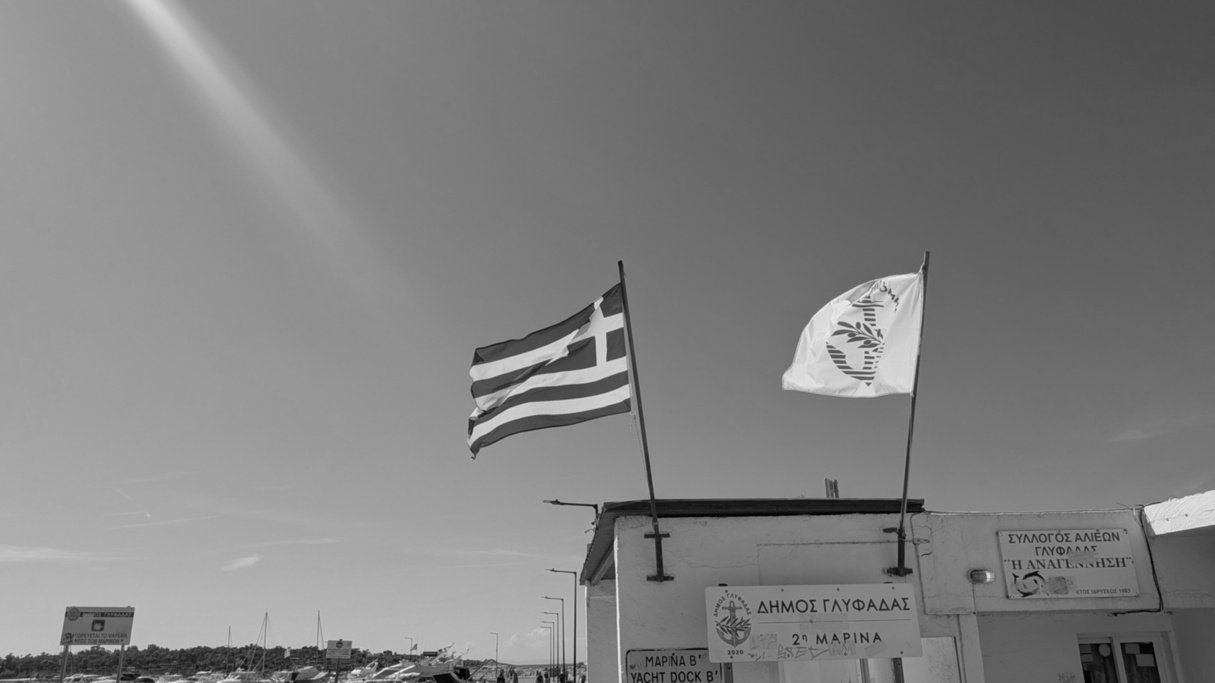

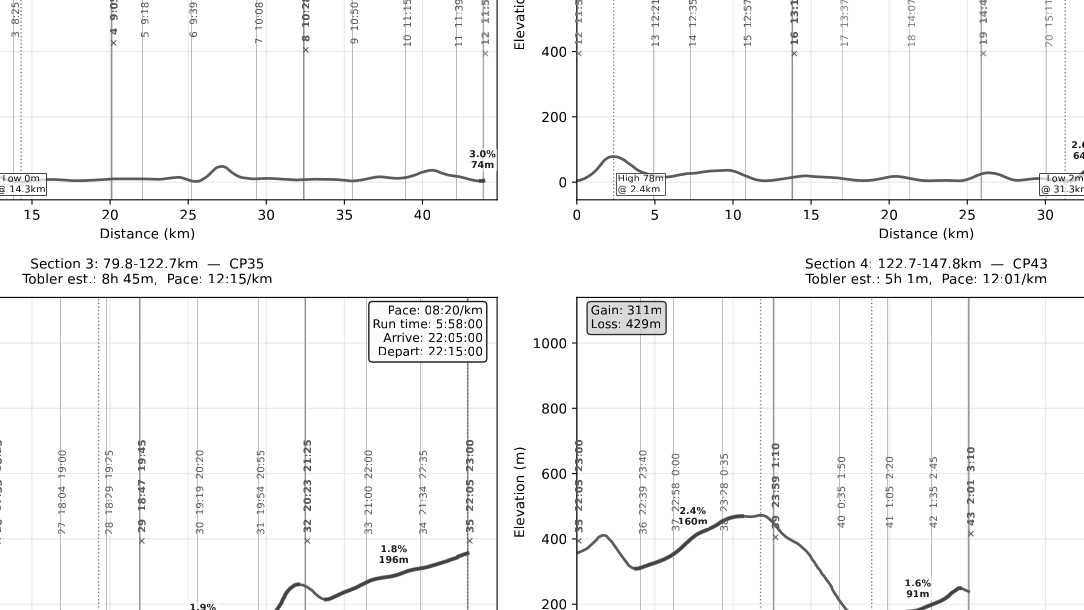
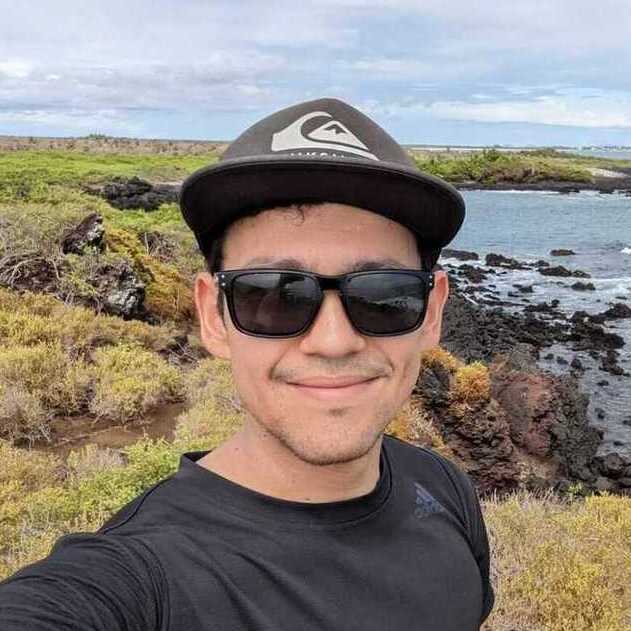
It is Thursday, September 24th. I am writing this from a hotel in Athens, two days before the start of Spartathlon, after one of the worst nights of sleep I have had all year.
The night before
Twelve hours before my flight from Berlin to Athens, the water tank of my toilet broke.
Of all the nights this could have happened, it chose the one before I left for Greece. With no time to find a plumber, I rushed to the nearest home improvement store before it closed, bought the replacement parts, and did the repair myself. It worked. It also cost me most of the evening and whatever calm I had built up over the taper.
Somewhere in the middle of those hours, I seriously considered cancelling the flight. I could stay home, get a professional in, and move my departure to Friday. That would still leave enough time to prepare for Saturday.
In the end, I got on the plane as planned. A friend agreed to stop by my apartment and check for water damage while I am away. So far, nothing. The fix seems to be holding. But I would be lying if I said the stress had already left my body.
Waking up without soreness
I have not run since last Sunday. It is a strange feeling. After eighteen weeks of training, I am rediscovering what it is like to wake up without sore muscles. My legs feel almost unfamiliar. It often happens in the days leading up to an important race. The calm before the storm, so to speak.
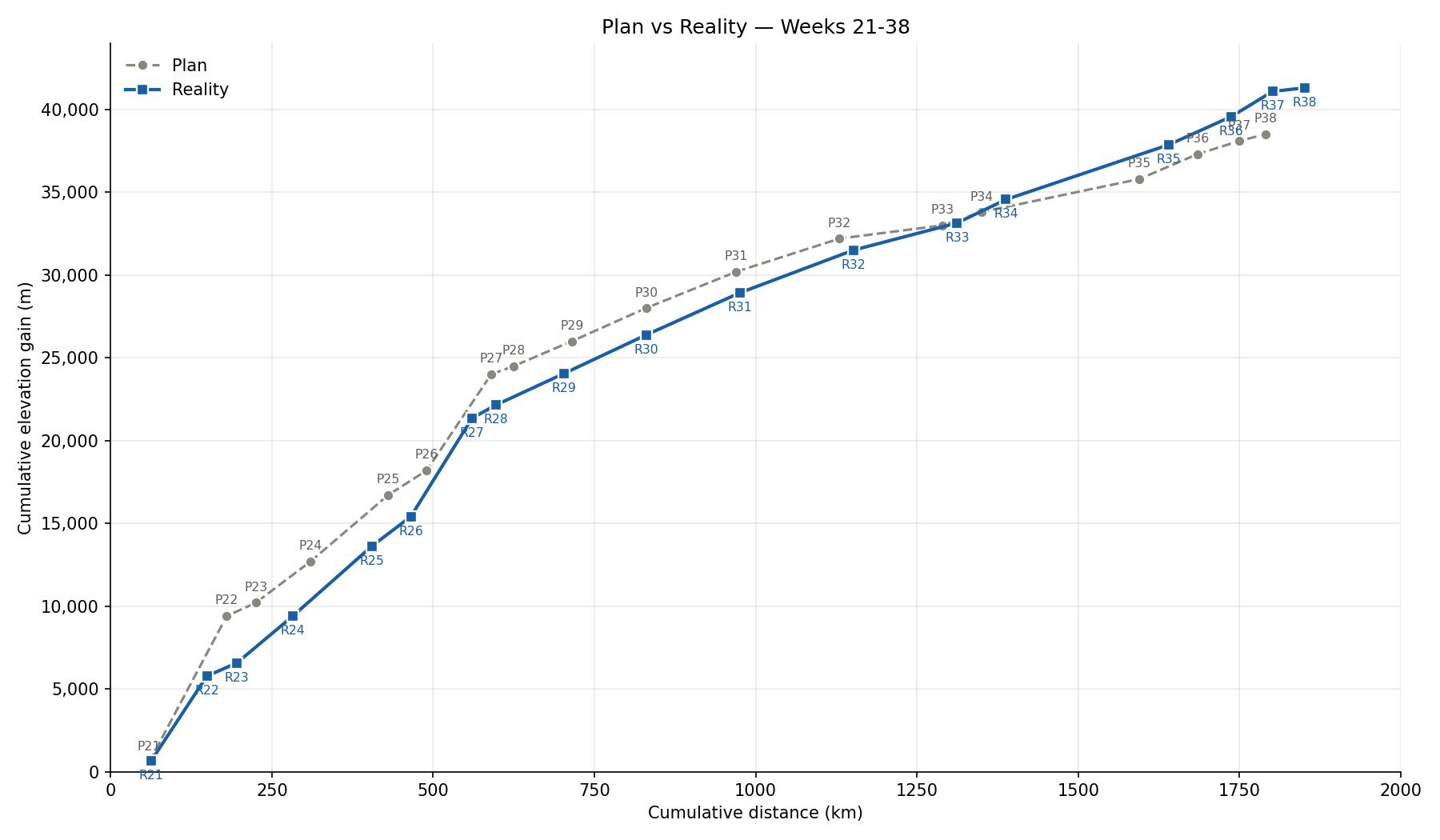
Back in week twelve, I wrote that the goal for the final block was not just to close the gap with the plan, but to go past it. I would rather arrive with a small surplus than exactly on schedule.
That is how it ended. I finished the build above plan in both cumulative distance and cumulative elevation, at 1,851.0 km and 41,304 m of ascent, compared to the planned 1,790 km and 38,500 m respectively.
My Garmin weekly average endurance score also kept climbing over the past six weeks, from 7343 to 8792.
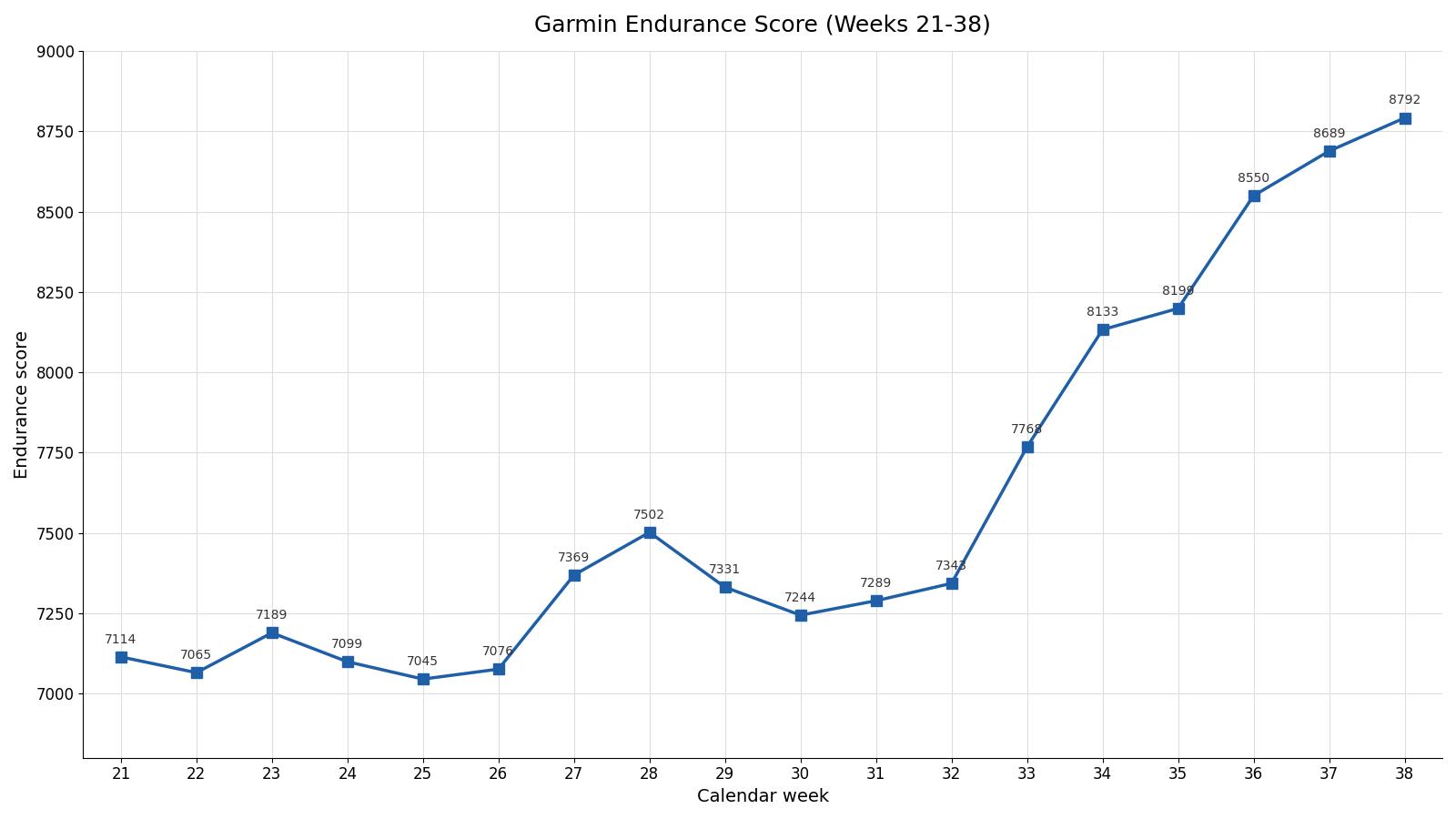
I am still not sure what that number really means, but I will take it. My suspicion is that Garmin is highly sensitive to speed, and that most of this increase comes from the VO2max sessions on the track rather than from the long, slow kilometers that will actually matter on Saturday. Spartathlon will not ask me to run fast. It will ask me to keep moving for a very long time.
Athens
The hotel is buzzing. People from all over the world are in the lobby, the elevators and the registration area, almost everyone wearing their country’s flag somewhere on them: a cap, a shirt, a patch on a bag. It is the first time in eighteen weeks that the race feels like a shared thing rather than a private project.
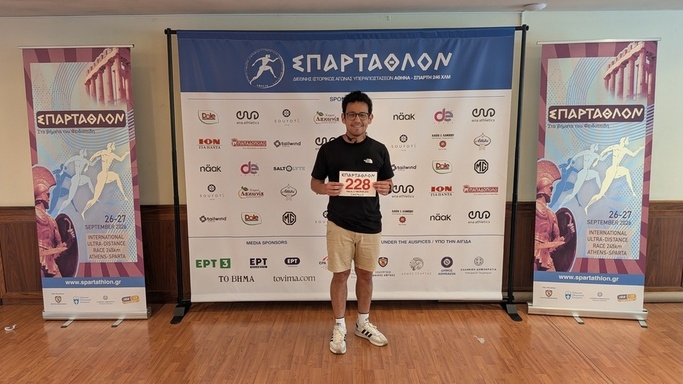
As I was going through registration, talking to the organizers and picking up all my documents, the question came, not entirely unexpected: did you just arrive all the way from Colombia today? Thankfully not. I would be much more tired than I already was.
The forecast
Saturday in Athens: a maximum of 26°C and cloudy. Sunday in Sparta: 27°C and sunny.
For context, the city reached 32°C on Monday. Heat is the defining feature of this race, and most of my preparation this summer was built around it. If the forecast holds, we might get a Spartathlon that does not reach the 30s. That would be a tremendous break on race day.
The work is done. What is left is preparing some food for fueling, stretching, sleeping well, eating well, doing a short shakeout, and arriving at the Acropolis on Saturday morning as rested as possible.