
Twelve weeks into the build, and a few things that were open questions in June are now settled.
The heel
The light discomfort in my right Achilles that I noticed back in week six is gone. It showed up on hard climbs, faded once warm, and was reduced to tenderness by the next day. That pattern held for a few weeks and then it simply stopped showing up at all.
One thing less to think about. Hooray.
A fitness bump (?)
According to Garmin, my endurance is going up.
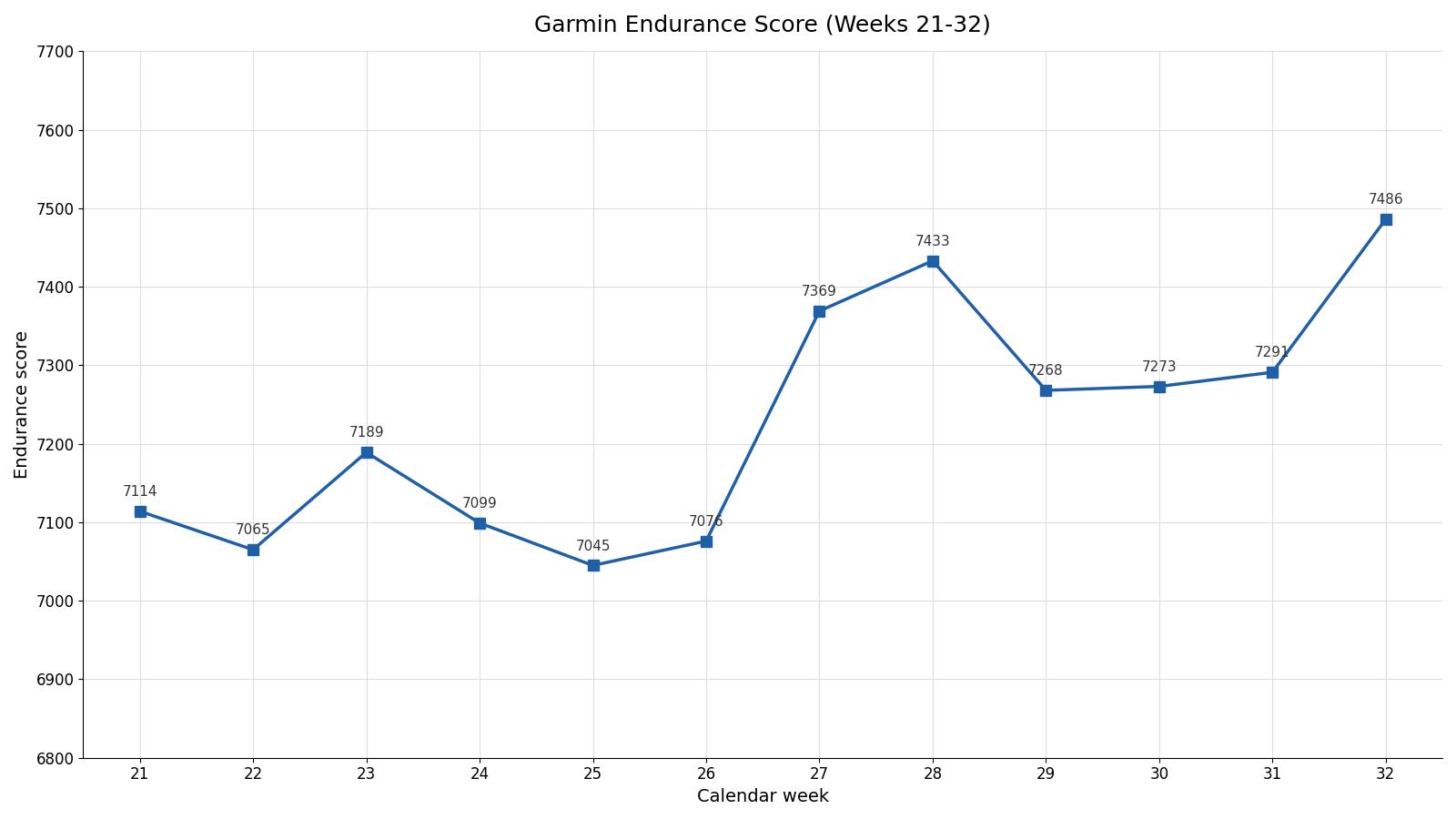
It sat in a narrow band through the first stretch of the block, 7114 in week 21, dipping as low as 7045 in week 25, essentially flat across the Everesting and Queyras buildup. Then week 27, Queyras itself, it jumped to 7369, and it has stayed in that higher range since, closing at 7486 by last week.
That is a real jump, but I do not think it means I got dramatically fitter in a single week. I think it means the tool got better at measuring me. This happens to me every summer, for the same reason every year: trail goes on standby for a couple of months and I shift almost entirely to asphalt. Flat, even effort on a predictable surface is exactly what these platforms are built to read well. Climbing on technical terrain, with the constant surges and stalls that come with it, does not translate cleanly into whatever model they use to estimate endurance.
Shoes and gear, both settled
The shoe question from a few weeks ago is closed. I have been running consistently in the Novablast and I am comfortable in them, comfortable enough that a second pair is already on the way. I will rotate them through on race day.
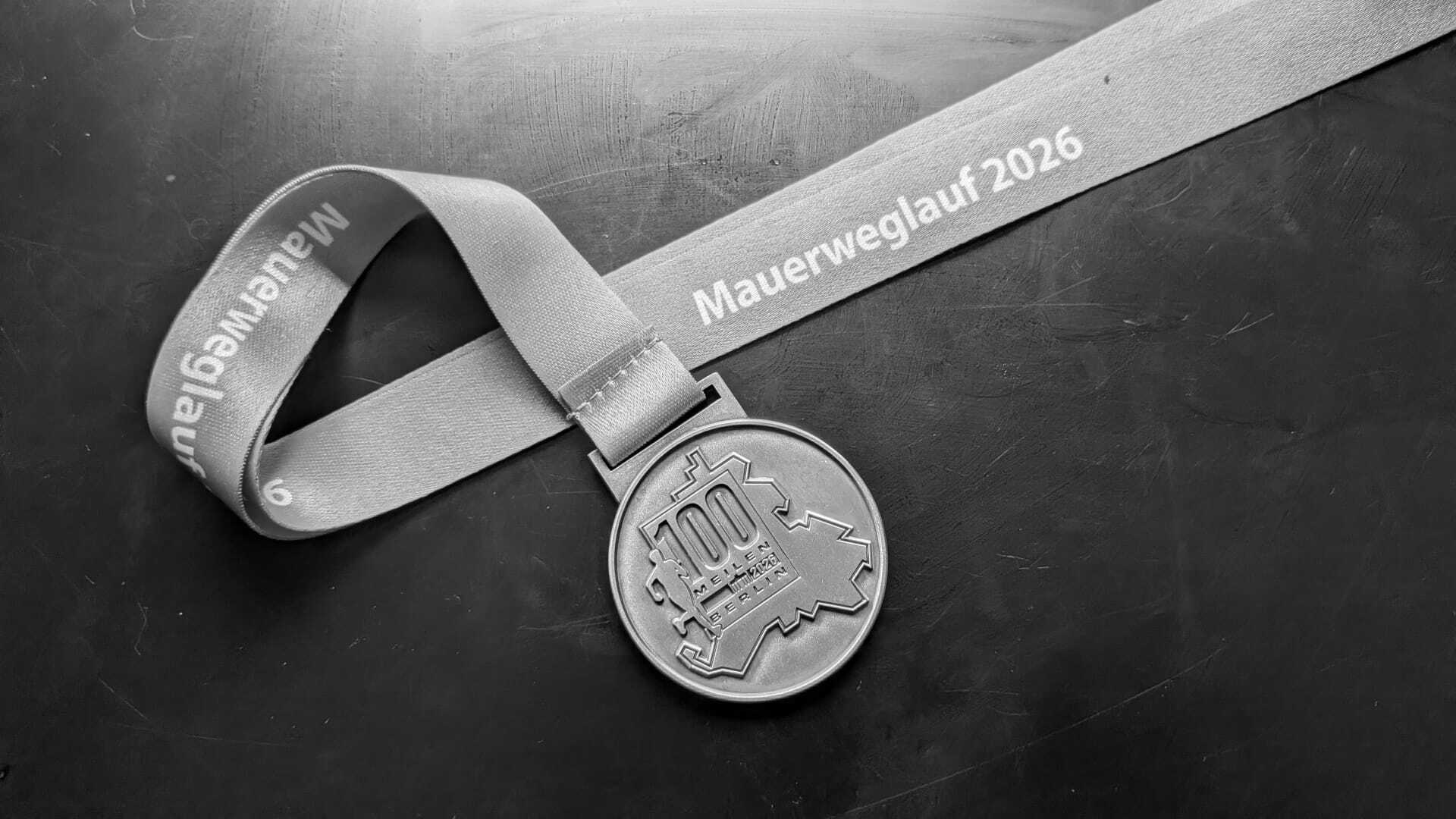
The vest versus belt question is settled too: the Salomon vest. Both the shoes and the vest are going into their real test this weekend at the Mauerweglauf, run in relay with friends from the Berlin Trail Runners.
This weekend: Mauerweg, in the heat
I have run the Mauerweg three times before, most recently as the qualifier for Spartathlon itself. This time I am not running it solo or for time. I am doing a relay leg with friends, roughly 80 kilometers, scheduled for the hottest window of the day, between 12:00 and 20:00, with temperatures expected above 30 degrees. This edition will be the hottest conditions I have experienced for this race.
The goal is specific: simulate a pace comfortably ahead of Spartathlon cutoff pace in genuine heat, with the gear I intend to race in. Flat, mostly paved, and long. I will be aiming to finish my part of the relay at a pace of 6:35. It is also my best chance before Greece to test long sleeves against direct sun for an extended stretch, something I have not settled yet.
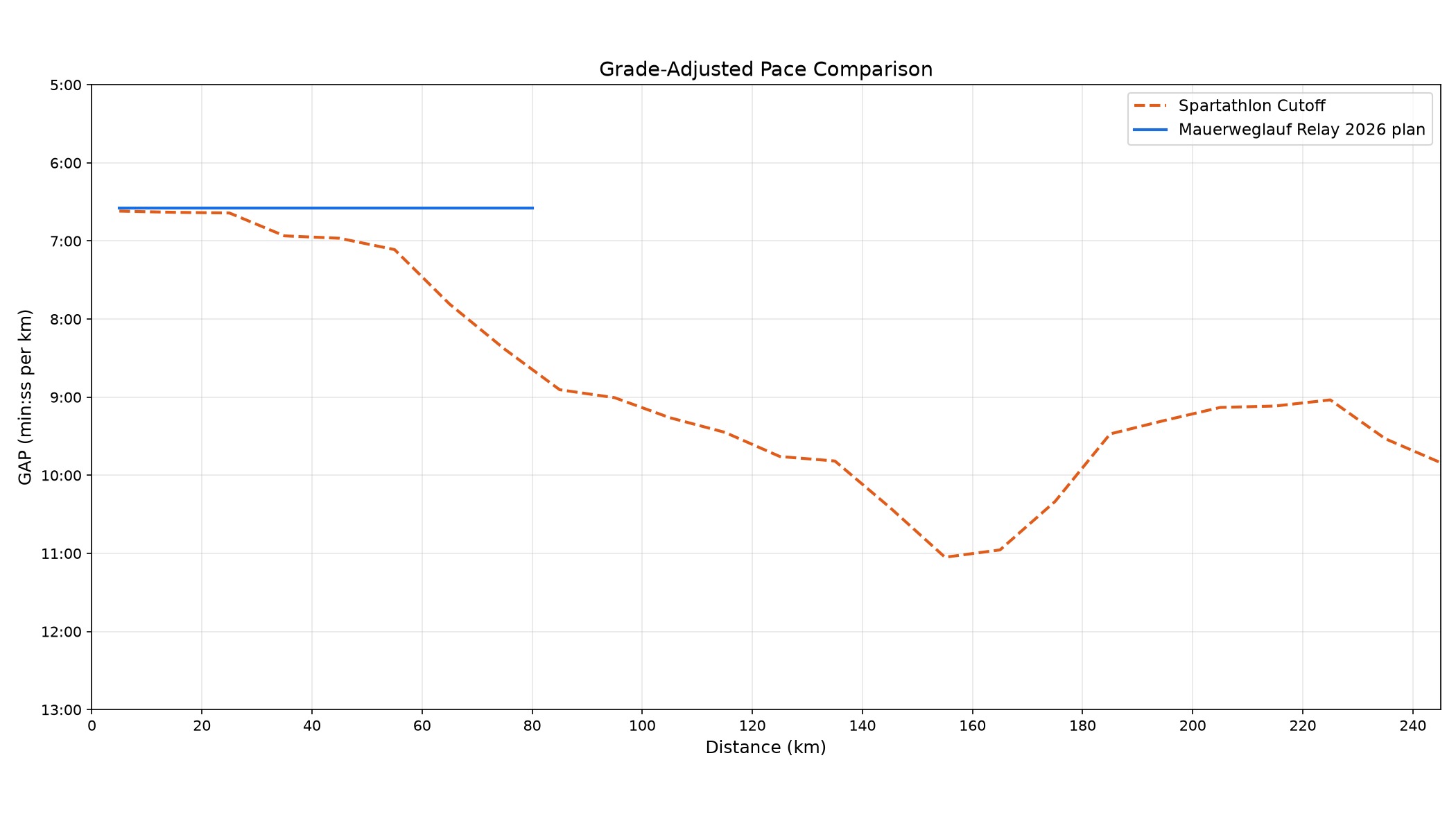
I will also be testing the Garmin data screens, the data points I will have on my watch for race day, including a too-fast alarm that notifies me whenever I am running faster than a 5:55 pace (my lactate threshold sits at 6:04).
Where the numbers stand
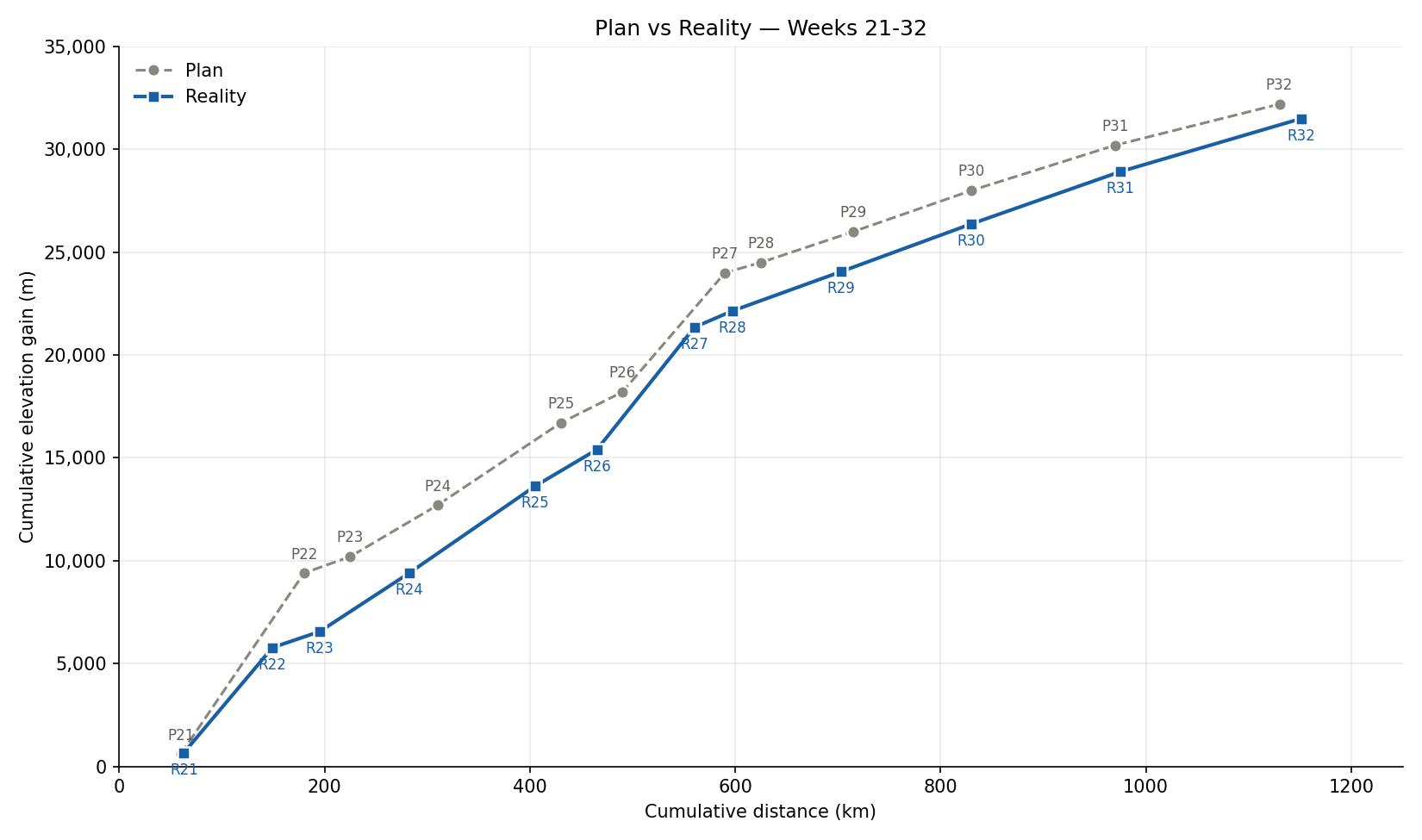
Distance has caught up to plan. Elevation is still behind, but the gap has narrowed steadily since the deficit opened during the Everesting week, and it is closing faster than I expected without me actively chasing it.
The plan for the next block is not just to close that gap. It is to go past both distance and elevation. I would rather arrive at the Spartathlon block with a small surplus behind me than exactly on schedule.
The weeks ahead are, on paper, the hardest of the entire plan. This is where the volume peaks, where the long back to back days start showing up, and where the training is meant to resemble Spartathlon itself as closely as Berlin allows.
For now, the Mauerweg relay is the next checkpoint. Heat, pace, and gear, all at once, two weeks before the true peak week begins.