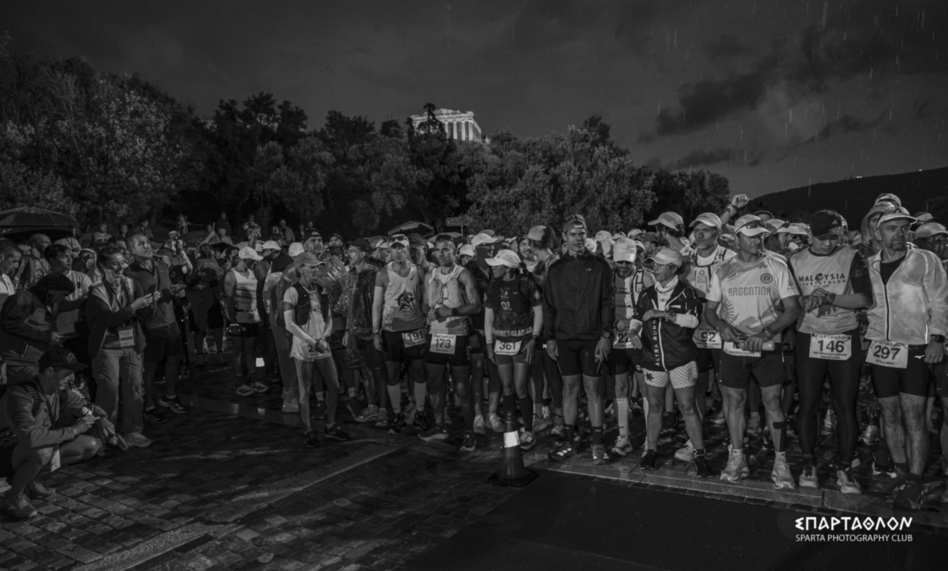
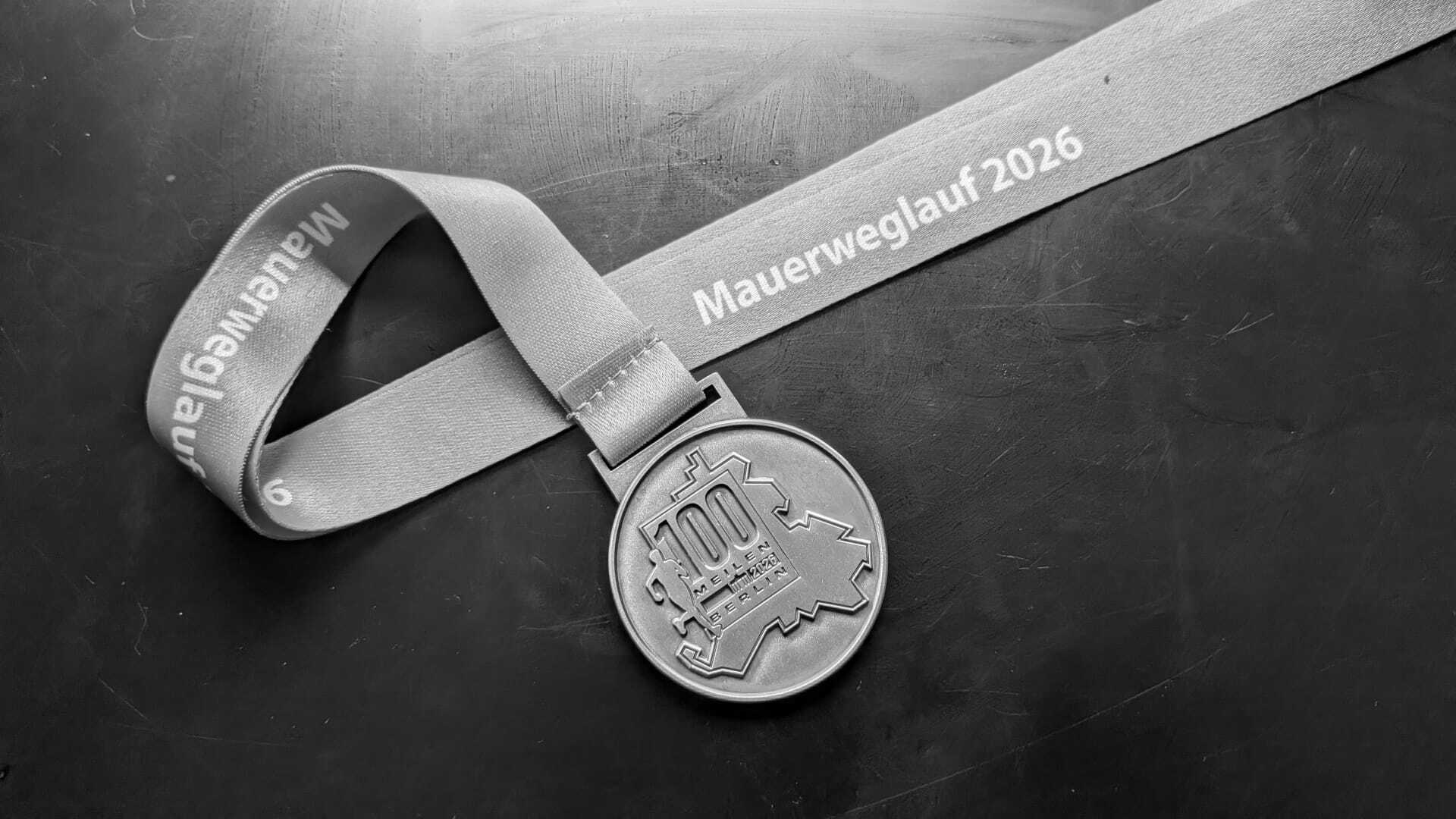
The Mauerweglauf has become a staple of my running calendar. I have run the full hundred miles three times. This year, once I committed to Spartathlon, I knew that I would not be running the whole distance again. But I also did not want to skip it entirely. When I built the training plan back in May, I saw that a long run fell during Mauerweg weekend anyway. So instead of choosing between the race and the training block, I decided to do both: run it as a relay.
I invited a few friends from my trail running group. I asked them to help me train, not to chase a time. My leg would be about 80 kilometers, theirs 20 each. They agreed. It also meant I would get to simulate race conditions and test gear on a long effort, inside an actual event, with aid stations and other runners around me. And as it turned out, the day would also be brutally hot. A good, if unplanned, chance to put the summer’s heat training to the test.
The buildup
The long runs leading into it had been along sections of the Mauerweg itself: 30 kilometers at 22 degrees three weeks out, 43 kilometers at 18 degrees two weeks out, 65 kilometers at 22 degrees the weekend before. The forecast for race day was 35 degrees. A different animal entirely.
My team started at 8:00. I picked up my leg at kilometer 51, at noon, with fresh legs and a plan to hold a cushy Spartathlon cutoff pace in real heat, with the gear I intend to race in.
Into familiar, unfamiliar territory
The first kilometers were good. I know this course by now, mostly from race day, so every landmark triggered the same small mental game: what comes after this bend, how far to the next stretch I recognize. Familiar ground, visited once a year.
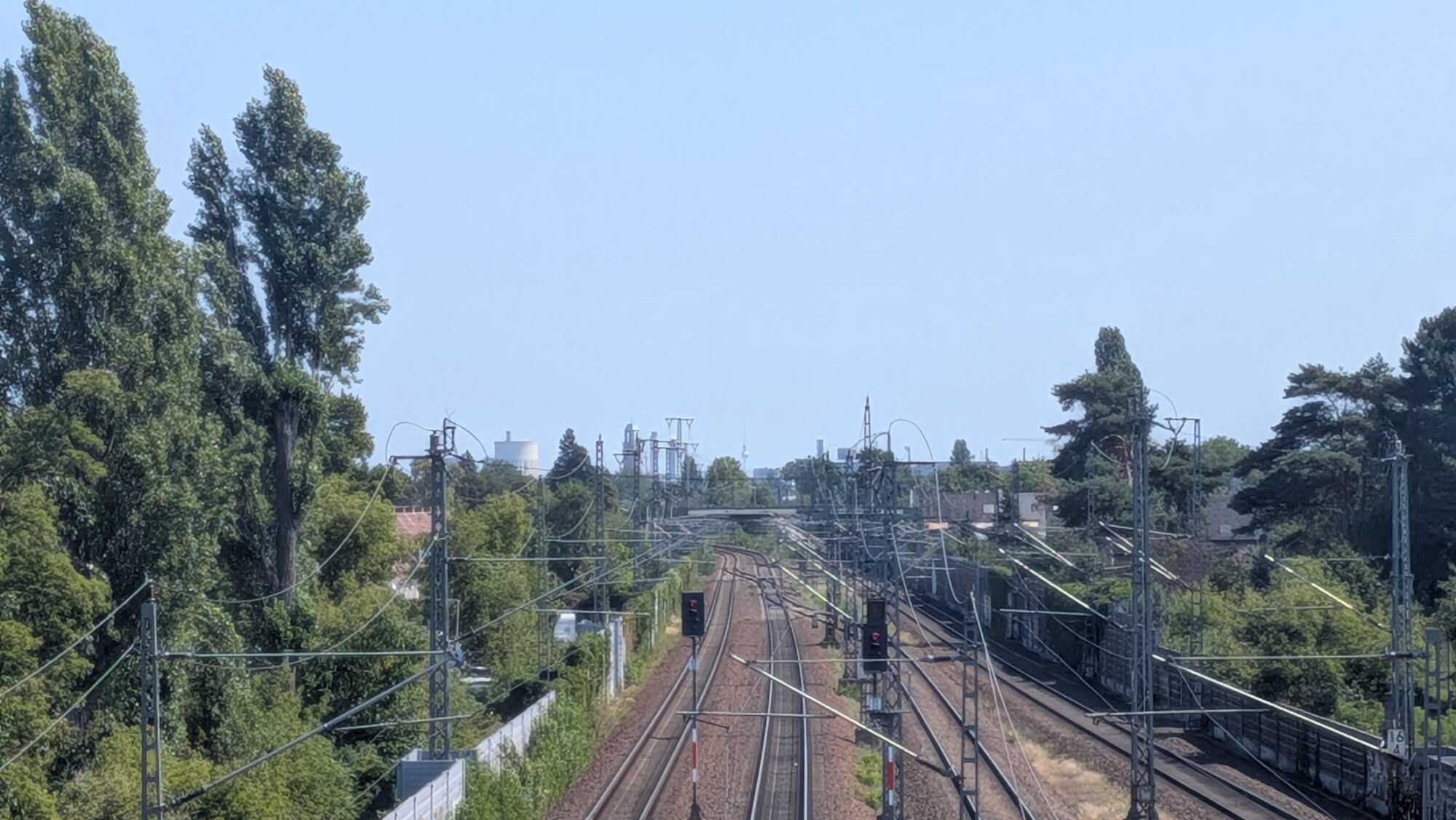
By the time I joined, the single runners, five hours in, were bruised. People walking with visible difficulty, dehydrated, some sitting outside restaurants along the route with no intention of moving again. Neighbors had set up impromptu cooling stations with garden hoses and buckets. I saw a man running with an umbrella. That was a first for me.
I had the too-fast alarm on my Garmin, and it went off more than once on the flat sections. A useful reminder that this was going to be a long day and that starting too keen would cost me later.
My plan, based on the training block, was to refill only every other aid station and run on flasks for about 13 kilometers at a time. At every stop I dunked my hat and arm sleeves in the cooling buckets before putting them back on, letting the wet fabric cool me down. That trick worked well enough that it is coming to Athens with me.
Where it started to go wrong
At Schloss Sacrow, 25 kilometers in, I went to refill and noticed the water was warm. Not cool, not lukewarm. Warm, from sitting out in the sun all day. I could feel it on my hand as the volunteer poured it into my flask. I tried the iso drink instead. Worse. I did not even bother with the coke.
At the next stop, Revierförsterei Krampnitz, I needed more cooling, so I took the vest off entirely, along with my shirt, and dunked everything. That is when I found the first real downside of running in a vest rather than a belt: if you want to dip your shirt, the vest has to come off with it. A belt would not have had that problem. More warm water there too. I was starting to understand I was not drinking enough, and there was not much I could do about it.
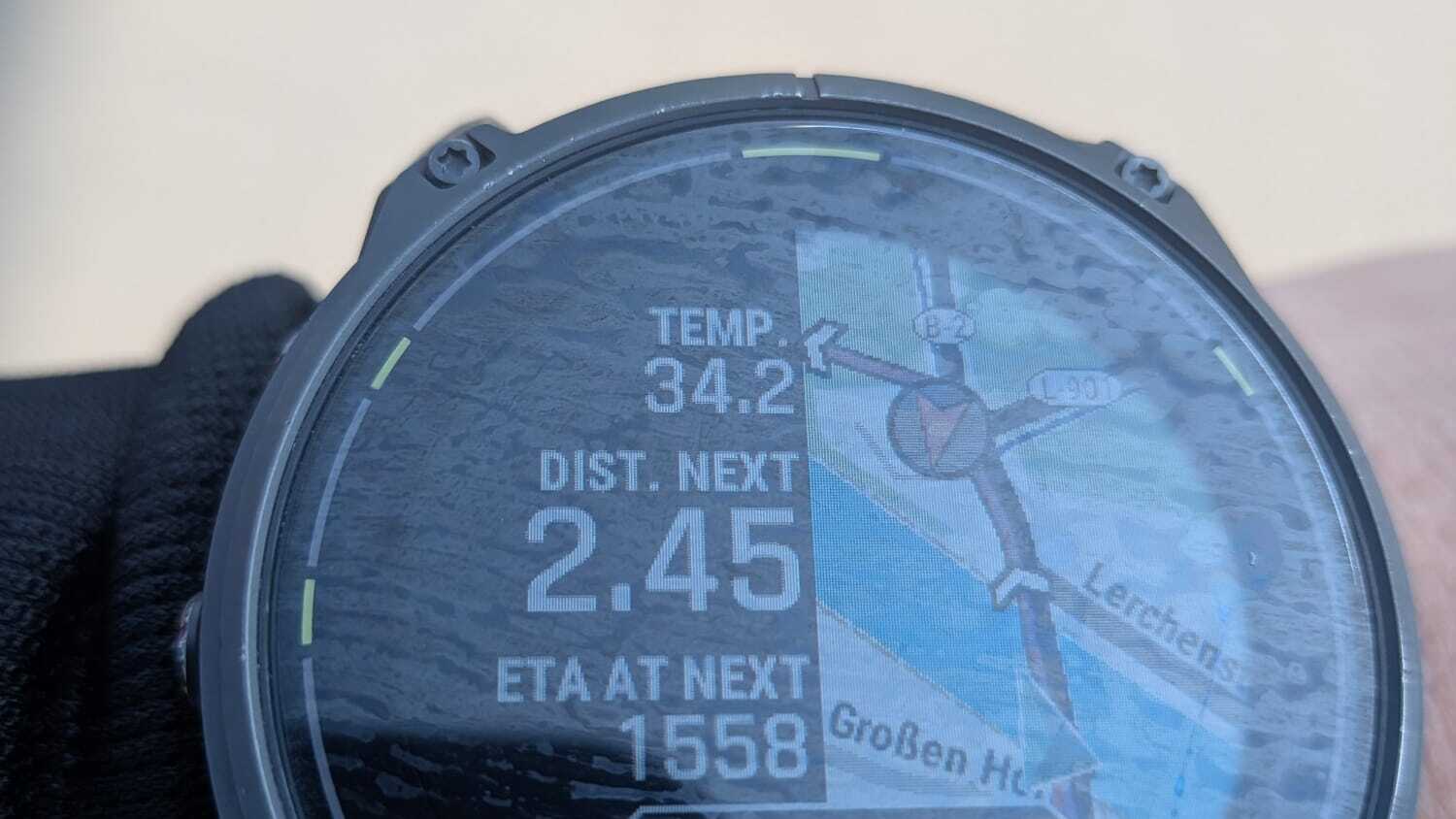
By the long paved stretch along the Havel, my Garmin recorded 34.2 degrees, the hottest reading I noticed. At Brauhaus Meierei, kilometer 38, I finally found something cold and drank as much as I could to compensate. It did not last. The next station was warm water again, and by kilometer 50, at Königsweg, my pace had already started to slide.
The return of the GI distress
A few meters before Königsweg I knew I needed a bathroom stop. My stomach had been hurting for the last kilometer. I dealt with it and kept moving, but by then I had lost my appetite completely. I started throwing out the remaining mashed potatoes I was carrying. The body needed the calories badly. But I could not ingest them.
I pushed to Sportplatz Teltow, one of the three big aid stations with drop bags. In past years this stop was chaos, runners everywhere, bathrooms impossible to get near. This year it was empty. A volunteer asked what I wanted to drink and, when I begged for anything cold, disappeared and came back with a bottle of sparkling water. I have never once drunk sparkling water during a run. At that point I did not care.
The stomach pain came back soon after, worse this time. I started walking in stretches, trying to let it pass, restarting, and having it return again. That cycle is pure damage. It is hard enough to get back into rhythm once. Doing it over and over, with the constant fear that you might not make it to the next toilet, wears down more than the legs do.
This was at kilometer 56, with 24 to go. At one point I seriously considered leaving the course for a gas station to buy something cold, the way I would on an unsupported long run. I thought about it but decided against it, unsure whether it would get me in trouble with the race officials. So I kept going, on nothing but the panela powder I still had, since I had already ditched the solid food.
From there to the finish I saw maybe ten other runners, most of them single runners, grinding out the last marathon of their hundred miles. I had fifty fewer kilometers in my legs than them and was already struggling. It put things in perspective.
With no night gear on me and a hard personal cutoff of 21:00, the game became landmark spotting again: the double road, the house with the purple roof, the narrow single-track section, the sharp corners I recognized from Strava maps. Small but meaningful proof of progress.
The finish
I reached Rudow, my final relay handoff, and saw my team and friends waiting about 200 meters out. Before greeting anyone, I asked the volunteer with the hose to turn the pressure up and just went and stood in it.
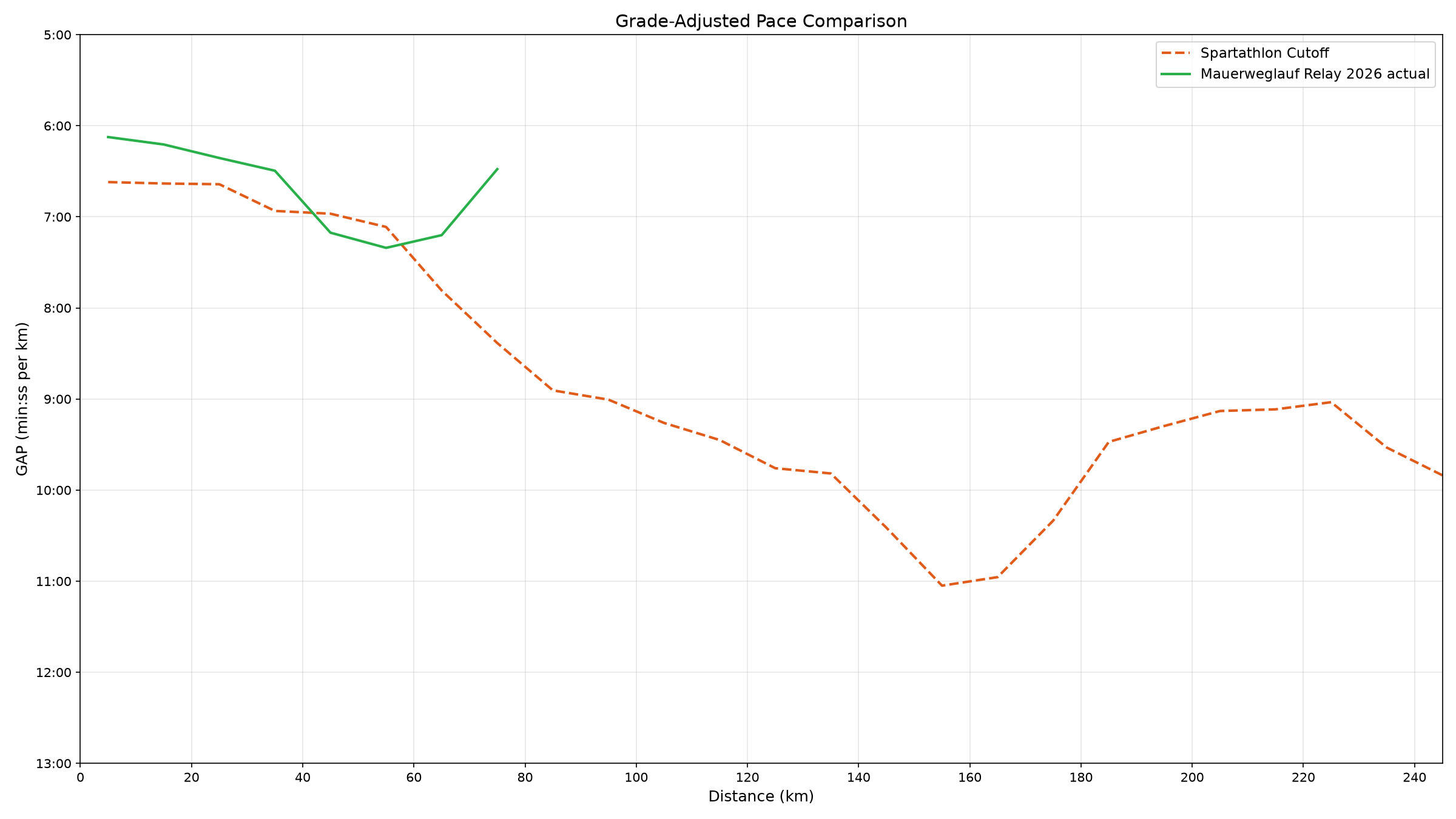
Final time for my leg: 6:41, six seconds per kilometer slower than the 6:35 goal. On paper, close enough. This average would have been comfortably inside Spartathlon cutoff pace for the first 80 kilometers. However, had this been the real race, that stretch of walking and restarting would have been enough to put me behind cutoff early.
As a team, we finished 31st overall and 18th among the relay teams. Respectable, given the day.
What actually happened
Looking at it after the fact, the picture is straightforward. The warm water made me reluctant to drink, so I fell under my modest target of 800 ml per hour. In 35-degree heat, the body needs more blood flow to the skin to cool itself, which means less blood flow to the gut. Less gut function, combined with dehydration and a higher relative concentration of carbohydrate in what little I did drink, is a direct route to GI distress.
The heart rate data backs this up. On comparable long efforts my average sits around 122 bpm. This one came in at 131, at an average temperature of 30 degrees. The body was working harder in the heat, before accounting for the running itself.
What changes for Athens
The arm sleeve and hat trick in cold water stays, it worked exactly as intended. We are adding a cooler to the crew car so I have access to genuinely cold drinks at defined points, rather than hoping the aid stations have something usable. I have read that Spartathlon aid stations have ice. I am not betting the race on it.
The bigger lesson is about pace strategy during the first 80 kilometers. It is everything. If I let a mistake in hydration or fueling get to me during the first third of the race, I can be facing the cutoff very early on.
We finished as a team, stomach trouble and all, and the day still counted for something. It was a good day. It was also evidence that heat management is not just about my body. It is about the water too.