

Ask any runner what ends more races than GI distress1, and a lot of them will say the same thing. The sun.
I have watched people quit races they had built their whole year around, undone not by the distance but by the temperature. You read about it everywhere, and it is worse on asphalt, where the road throws the heat back up at you. I ran the Lisbon half marathon in 2022 on a really hot day. I remember the conditions more than the race. The course was lined with ambulances, lights flashing, helping people everywhere. People do not just drop out on days like that. Sometimes it is far more serious than a DNF.
So heat is not something to be treated lightly. With Spartathlon in late September in Greece, it is arguably the single biggest factor standing between me and the statue of Leonidas. This post is about what I have learned, mostly by getting it wrong, and what I am doing about it this summer.
Two words for the same goal
Heat adaptation is the body’s process of adjusting to heat stress. There are two ways to get there. You can train in the actual heat outdoors, which is traditionally called acclimatization. Or you can force the adaptation in an artificial setting, a sauna or a heated indoor room, which is traditionally called acclimation. Same destination, different road. Living in Berlin means that, if I want the adaptation, I mostly have to manufacture it.
Where it started
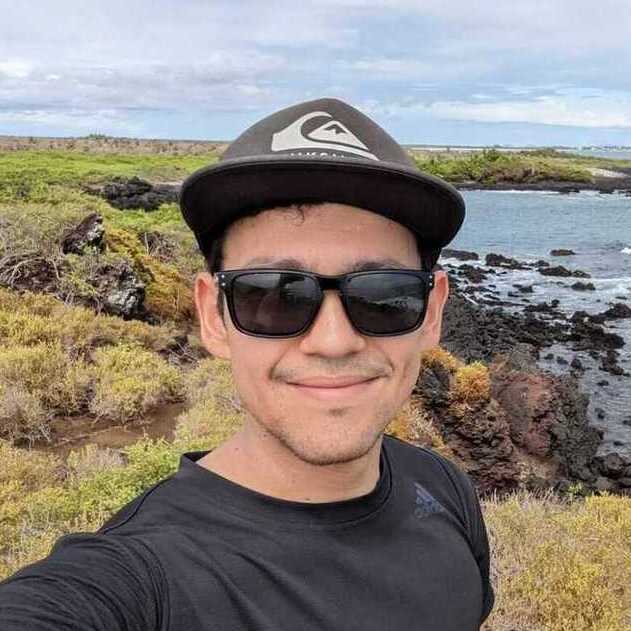
I have done multiple races on asphalt at high temperatures. But the place that actually taught me about the sun was Montañita, in Ecuador.
Montañita is my yearly surf pilgrimage, and it usually falls at the start of my running season, which means I tend to be there training for whatever comes first on the calendar. In January 2024, that was Transgrancanaria. I would head out for long runs along the beach at low tide, straight into the scorching midday sun, with no shade and no support. Humid and above 30 degrees was the daily treat. The only water on the route was the next town, twenty kilometers down the coast. I would start with my vest full and watch the flasks heat up to body temperature within minutes. Warm water under the hot sun is its own small misery.
So I started freezing the flasks the night before. By the time I set off, they were still solid. They would melt slowly over the run, which gave me cold water for far longer, and as a bonus the frozen bottles sat against my back and chest like ice packs. Two problems solved with one trick.
The frozen gel problem
Back in Berlin, I kept experimenting, this time with gels. I first tried freezing them for the 2024 Mauerweg, and it worked partially. The gels were still cold by the time I unpacked them from my drop bag. Cold gels do go down more easily during a hard effort. The problem was that the flavor of my normal gels did not survive freezing. It came out distorted and more acidic, which is not a good idea when your stomach is already on edge after ten hours.
The fix came later, when I found gels actually built for this. The MNSTRY ice gels are designed to be taken cold, and they became a must-have for races. It is a reminder that sometimes the trick is not a clever hack but simply using the product made for the job.
Kilian in Western States
In 2025 I was following Kilian Jornet’s buildup for his Western States comeback on Strava. He lives in Norway, which is great for trail running. The only issue is, there is no way to find Auburn valley heat in the Norwegian mountains. So he brought the heat indoors. He would set the thermostat to forty degrees and do hour long sessions on a static bike or treadmill at home to replicate conditions he could not find outside.
I was preparing for a race that promised to be hot, the Cappadocia Ultra Trail. One hundred and twenty kilometers across the arid terrain of central Turkey, with almost no shade and October daytime temperatures that can climb into the thirties. From everything I read, the heat was going to be a defining feature. So I borrowed Kilian’s approach and built my own version.
Manufacturing heat
On the passive side, it was the sauna. For the two months before the race, once a week, I would do three sessions of ten minutes each. The goal was not to suffer for its own sake. It was to get reacquainted with being hot, to practice hydration, and to learn to stay calm in it. Patience in the heat is a skill. Panic raises your effort and your core temperature at the same time, so a lot of heat training is really just teaching yourself not to flinch.
On the active side, I was putting on layers. I started going to spinning classes in Berlin dressed completely wrong on purpose. Three layers on top, one of them a waterproof jacket. Tights and long pants. A beanie, with the hood up over it. I looked absurd. People asked me more than once whether I was feeling alright. I was. The point was to put my cardiovascular system under heat stress while I worked, and to watch my heart rate over the weeks. Seeing it settle lower at the same intensity, session after session, was the clearest sign the adaptation was happening. As a bonus, it was good cross training and a welcome break from pounding the road.
Cool the skin
There is one technique from that period that I now consider a must, and it is the one most people overlook.
Everyone knows to drink in the heat. Fewer people actively cool their skin. The latter is what keeps your core temperature in check when drinking alone cannot. I tie it to the aid station habit I wrote about before, the one where I only track distance to the next stop. If I am approaching a station and still have water left in my flask, I open it, take off my cap, and pour what is left over my head, neck and arms. I arrive cooled down and ready to refill anyway. The water was going to be replaced in a few hundred meters regardless, so spending it on my skin costs me nothing.
All of it came together at Cappadocia, which became the fastest trail ultra I have run to date. Hot, dry, exposed, and for once the heat was something I had planned for instead of something that happened to me.
The plan for Greece
So what goes into the Spartathlon block. The honest first answer is to repeat what already works, because none of the above was free to learn and there is no reason to relearn it. On top of that, a few specific things I want to dial in over the summer:
- Sweat rate and sodium. I want to actually measure how much I lose during hot sessions, not estimate it, so I can match my intake to it. Heat changes the sodium math, and Spartathlon is long enough that small errors compound into large ones.
- Running in layers. Not just spinning, but real runs overdressed, monitoring heart rate and perceived effort, so I learn how I handle heat while my legs are also under load. The bike teaches the cardiovascular side. Only running teaches the running side.
- Wet, chilled clothes. I want to get used to the specific sensation of running in a soaked shirt. The plan is to stop mid run, likely at the track, dunk the shirt in water, put it back on, and keep going, so that on race day the feeling is familiar rather than distracting.
I am writing this, fittingly, while Europe bakes under a heat wave that has taken over the headlines all week. Records are falling across the continent, and where I am right now it has been genuinely dangerous, not just uncomfortable. It is grim weather to read about. But it is excellent weather to train in.
-
The hotter it gets, the more blood your body diverts to the skin to shed heat, which means less of it reaches the gut to handle digestion. The stomach and the cooling system end up competing for the same blood supply, and the stomach usually loses. In practical terms, GI distress and prolonged heat exposure are the same problem. ↩