
Every non-elite long-distance runner gets asked the same question. Why do you do this? We live in climate-controlled buildings and earn our living from laptops. Why train for something so difficult? Why not stop at the marathon and have fun from then on?
The answers are as common as the question. Training for something this hard teaches discipline. The sport gives you a community that has your back, in and out of the race. Or there is an old wound somewhere, and running very far is how you cope with it.
I think of these as hypotheses. They apply to almost every ultrarunner, myself included, and none of them can be proven or disproven. We all act on belief. But there is another reason that comes to mind. For me, at least.
The Cruelest Sport
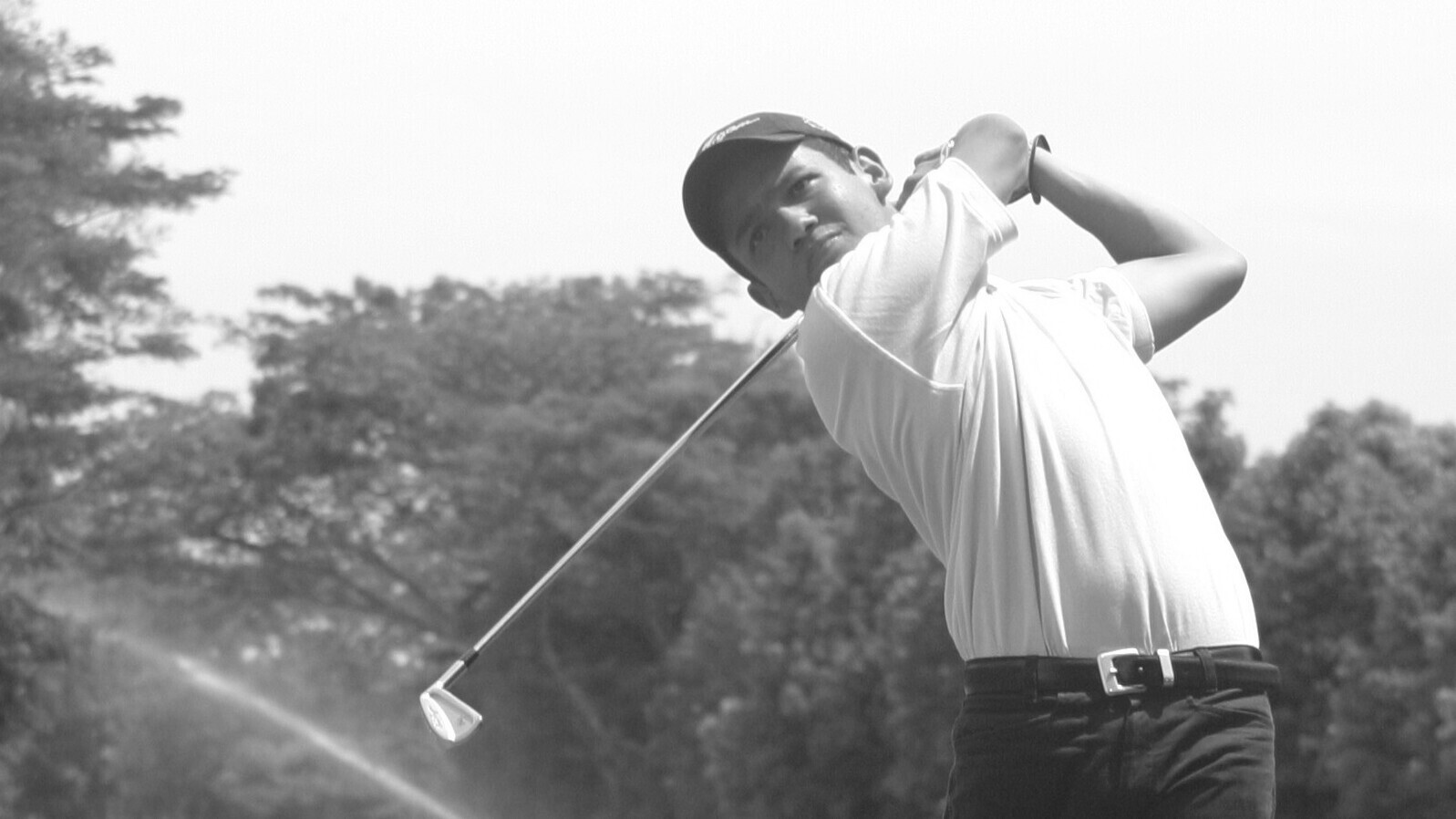
My parents hoped for a football player and signed me up for the youth team at our local country club. I was not a good fit. Martial arts, basketball, and tennis followed, and somehow all of it ended in golf. I started at twelve and soon became good at it.
Through my teenage years I trained five days a week, sometimes six, and traveled to tournaments around the country. For a couple of months, I was ranked among the top twenty amateur players in Colombia.
I am still not sure what I liked about it. Maybe the long walks, the nature, the silence. But I am sure about what it taught me.
Golfers like to say theirs is the cruelest sport there is. You can hit the ball well all day and still get a bad bounce or a bad lie that ruins the scorecard. Strategy and practice put you in a better position, but they guarantee nothing. Chaos can be around the corner.
Every golfer has lived a version of what happened to Jean van de Velde at the 1999 Open, when he arrived at the last hole with a three-shot lead and lost the tournament.
Golf also gives you time to think. On the walk from one shot to the next, I would linger over my mistakes. What have I done for the ball to bounce like that and end up in the water? I train so much. Do I not deserve a kinder break?
By the end of the day, I would come to the same conclusion. It did not happen for a reason. It just happened. Nothing is deterministic and everything is probabilistic. Bad breaks do not find bad golfers more often than good ones. We just remember them longer than the good breaks.
Looking for a Replacement
I stopped playing competitively when I went to college in California. Academic scholarships were a less uncertain bet than university athletics. I volunteered on Sundays at a golf club in Sacramento and played now and then, but I missed the routine and the discipline of working toward a goal in sports.
When I moved to Bonn for my graduate studies, I had more free time and wanted a sport I could be as good at as I had been at golf. I asked on Quora, as people did before AI. Someone suggested table football. I was terrible at it.
Meanwhile I went for runs along the Rhein in my old sneakers. Exam periods gave me a lot of anxiety, and when it got bad I would go to the hills around Königswinter and hike as fast as I could. To mark the end of my studies, a friend and I walked the Rheinsteig, a 320 km hiking trail, in ten days. It was my first encounter with endurance, and I enjoyed it.
In Berlin, the runs got longer. Speed never interested me, but distance did. Once, on my way to meet friends at the bouldering gym, I went for a short warm-up run, lost track of time, and came back having covered a half marathon. I knew people trained for that. I had done it on a whim.
A half marathon at the Müggelsee in 2018 came next, on a cold and sunny Sunday with System of a Down in my ears. Then the Berlin Marathon in 2019, which I finished a few seconds under my four-hour goal, gasping for air. I knew I could do a bit more.
The Same Lesson
Somewhere in those training blocks, the old feeling came back. Adding volume, mixing different sessions, planning hydration and race-day logistics, then executing the plan. It looked a lot like golf. And like golf, all that planning can be undone on the course in a moment.
At Transgrancanaria, I asked a volunteer for the distance to the next aid station. Seven kilometers, he said. It was about twice that, most of it uphill. I ran out of water and came close to quitting. During the Mauerweglauf, blisters kept me in a chair for 45 minutes at the 100-kilometer mark. At Pistoia-Abetone, I learned at the start that the route was open to traffic, and I very much dislike running on highways next to cars. In Queyras, I arrived well trained and could not breathe at altitude.
I prepared a lot for those races, and yet I ran into trouble. Some of these were my mistakes and some were plain bad breaks. The course did not care which. You accept what happened and you keep moving.
Golf showed me that the world is indifferent. Ultrarunning makes me practice what to do about it. In a single race I have gone through every mental state, from flow to crisis, and back to flow.
So when people ask why, this is my answer. Fairness is a subjective, sometimes romantic view of the world. You can live a good, honest, decent life and tragedy can still strike. I would like to be someone who accepts what he has been given and keeps going. A race lets me rehearse that a few times a year, over a day or two, with a finish line at the end.